Mental Exhaustion: Why We Feel Drained Even After Doing Nothing All Day
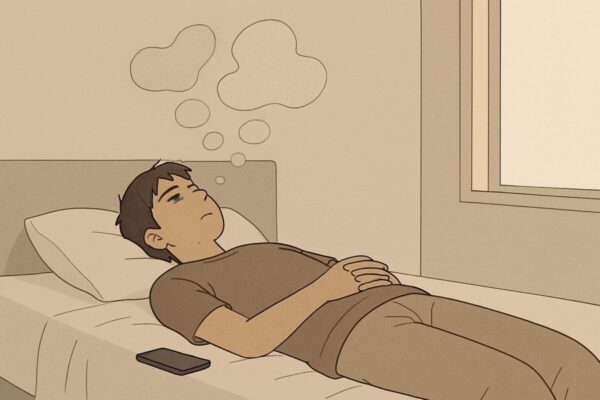
There are days when nothing particularly demanding happens. This kind of mental exhaustion arrives out of nowhere, stealthily — even when the day seems like a breeze on paper. No heavy workload. No intense conversations. No overt signs of stress. And yet, by evening, your head feels like lead — foggy, restless, strangely heavy. You didn’t run a marathon. You didn’t solve life-changing problems. You existed, at best. And still, exhaustion is there in silence, not leaving.
This sort of tiredness feels confusing because it does not play by the rules that we learnt. We assume that exhaustion must be earned, that rest must naturally follow inactivity. But mental exhaustion doesn’t work in this manner. It does not measure effort by movement. It measures it by exposure – exposure to information, stimulation, expectations, emotions, and constant internal noise.
In today’s world, even “doing nothing” is rarely empty. Our minds are almost never at rest. They observe, absorb, react, compare, and prepare — often without us realising that all of this is happening. And that invisible effort is what slowly drains us.
Table of content
Table of Contents
The Lie We Were Told About Rest
Somewhere along the line, rest became equated with stopping to do physical work. Sit down. Lie back. Close your laptop. As long as your body isn’t twitching, you’re supposed to be feeling better. When life was slower, quieter, and less mentally invasive, this way of thinking worked.
But the mind is not that easy to quiet down, like some bodily muscles. You could be still physically, yet sprinting mentally. And in running, thoughts hop from undone tasks to futures imagined, replayed conversations, and subtle worries you never invited. The body might be still, but not the brain.
That is why bed-scrolling doesn’t feel refreshing. That is why lying down with a racing mind doesn’t restore anything. Mental exhaustion builds not from effort alone, but from constant engagement without recovery. When the mind never truly disengages, fatigue becomes a background state rather than a temporary condition.
The Invisible Work Your Brain Does All Day
Even on those so-called “lazy” days of yours, your brain is working a lot harder than you think.
It reacts to notifications, processes data, interprets tone, recalls responsibilities, and predicts consequences. It makes micro-decisions nonstop — what to respond to, what to disregard, what to view further, what something signifies, and whether something is significant. Each micro-decision on its own is tiny, nearly imperceptible. Taken collectively, they become overwhelming.
Rarely does modern life allow the mind to actually disengage. There is always something for which attention will be required. Even in silence, often it can be filled with background noise: softly playing music, a video running behind, or a podcast used to avoid being alone with thoughts. Stillness has quietly become uncomfortable.
This uninterrupted stimulation is one of the primary drivers of mental exhaustion. Not because any single input is overwhelming, but because there is no space between inputs. The brain never gets the signal that it is safe to rest.
Why Passive Consumption Doesn’t Count as Recovery
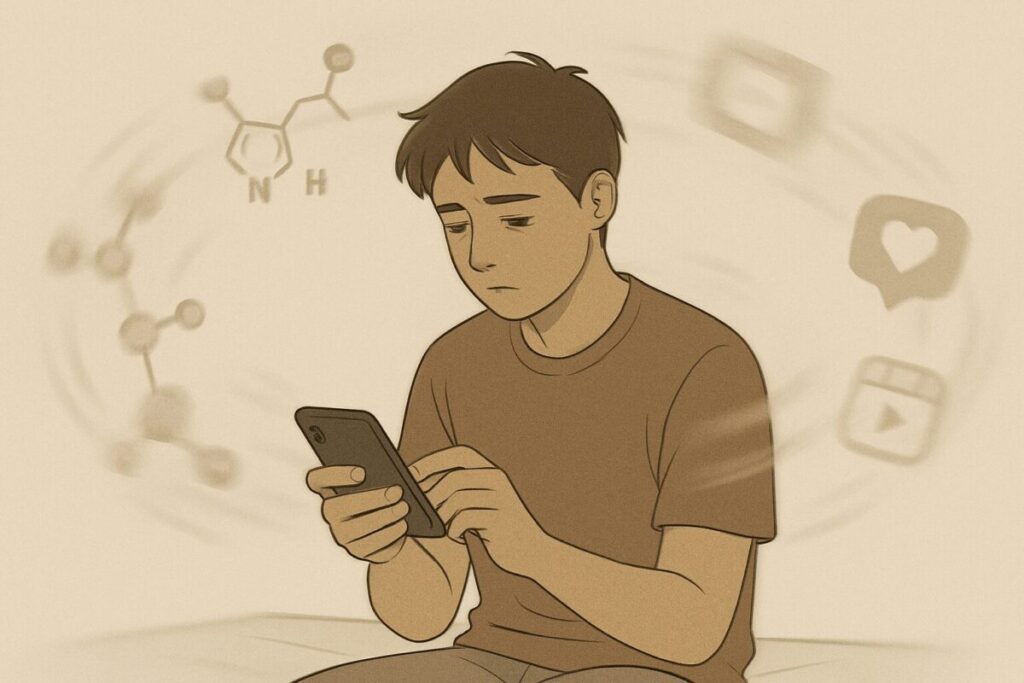
Scrolling feels like rest because it requires no visible effort. Your body remains still. Your mind, however, does not. Effort and recovery are not opposites. Recovery requires space — mental room to process, integrate, and release.
Each time you move to a new reel, your brain is anticipating something. Quickly, dopamine spikes high and drops, engaging the desire to want more. This is similar to stimulation, not restoration. Instead of becoming settled, attention becomes fragmented. This constant cycle closely mirrors our modern dependence on instant gratification, where quick stimulation replaces genuine mental recovery.
What looks like relaxation is often distraction wearing a comfortable mask. Where thoughts might otherwise rise to the surface and then move on, passive consumption simply switches out one input for another. The mind is kept filled but never sated. Over time, this pattern deepens mental exhaustion rather than relieving it.
This is why you can spend hours “doing nothing” and still feel drained. Your attention never actually rests. The resulting mental exhaustion is subtle but persistent.
The Emotional Weight We Carry Quietly

Not all exhaustion originates with stimulation. Much of it arises out of what is unspoken, unresolved, and unfinished emotionally.
Unhealed emotions don’t announce themselves loudly. They sit quietly; after all, it is like an avoided concern, a conversation not had, a comparison you pretend didn’t affect you, a fear one puts off continually. Each occupies mental space, even when you aren’t actively thinking of them. Many people rely on music as emotional therapy to cope with emotional overload.
The mind keeps these emotions open like open tabs. Running silently in the background, they consume the energy yet offer no resolution. Over time, this emotional clutter compounds and builds into mental exhaustion that feels disconnected from daily activity.
You are tired not because of what you did but because you carried so much without letting it go.
Constant Comparison and the Drain It Creates
Modern exhaustion is also deeply tied to comparison. Even when you are alone, you are rarely free from measuring yourself.
Social platforms insidiously represent curated lives, achievements, routines, and aesthetics. You might never consciously compare, yet the signals are absorbed by the mind nonetheless. It calculates progress, worth, and relevance without permission.
This silent evaluation creates pressure to do more, to be more, to catch up. Even rest begins to feel conditional. You begin to question if you deserve it. Constant self-monitoring is an exhausting mental energy drain unlike anything physical tasks could ever do.
Why Guilt Makes the Tiredness Worse
There’s an unwritten rule in contemporary culture: exhaustion needs to be justified. If you haven’t accomplished enough, your fatigue feels illegitimate.
And when burnout presents itself without visible productivity, guilt follows. You tell yourself you shouldn’t feel this way. That others are doing more, and that you haven’t earned rest. This internal dialogue will create the friction where relief should exist.
Rather than speaking to exhaustion, you debate it. Instead of resting, you explain to yourself why you don’t deserve to. The mind wasn’t designed to function under an unyielding self-judgement. That demands wear and tear in itself.
Why Multitasking Leaves You More Drained
People often confuse multitasking with efficiency. It actually fragments attention.
When you switch between tasks – even small ones – the brain pays a cost each time. Focus resets. Context shifts. Energy drains. And that’s true whether the task is work-related or recreational.
It is in a semi-alert stage while watching something and scrolling, or when one is replying to messages while resting or listening to the content so that it would be relaxing. It never gets to settle. In due course, such diffused attention causes mental fatigue.
Over time, this fragmented attention becomes a major contributor to chronic mental exhaustion.
What Actually Helps Reduce Mental Exhaustion

Recovery doesn’t need to be about extreme lifestyle changes. Recovery needs intentional emptiness: moments in which the mind isn’t constantly consuming, reacting, performing, or judging.
Silence helps. Not as an escape, but as a reset.
Single-task moments help. Doing one thing without background input lets attention gather rather than scatter.
Boredom helps: it allows the mind to do the job of sorting out unfinished thoughts instead of suppressing them.
These are not productivity techniques. They are acts of mental hygiene – small spaces where the brain can recalibrate.
Resting Without Running Away From Yourself
Rest is not about deadening the mind. It’s about giving it breathing room.
When you stop filling every quiet moment, then thoughts that you have been avoiding may arise. It would feel uncomfortable. But discomfort is not danger; it’s processing.
Mental exhaustion often disappears when the mind is finally allowed to complete its unfinished loops – when attention slows, presence replaces distraction.
You do not have to fix everything. You do not have to optimise rest. Sometimes you just need to stop replacing stillness with noise.
Closing Thoughts
Feeling mentally exhausted after doing nothing is not a personal flaw — it’s a clear sign of mental exhaustion in an overstimulated world. It is a signal — a response to constant stimulation, emotional backlog, comparison, and unearned guilt.
You are not lazy. You are overloaded.
And the solution is not more effort. It is gentler awareness. The kind that allows the mind to rest without demanding proof, productivity, or permission.