Why Nothing Feels Enough Anymore (Instant Gratification Explained)
In a world built on instant gratification, satisfaction fades fast. This article explains why nothing feels enough anymore—and how to feel fulfilled again.

Real-life psychology insights to help you understand your mind, emotions, and behaviour better. This category explores why we think the way we do, decision fatigue, how our brains work in daily life, and ways to navigate mental patterns with emotional intelligence.
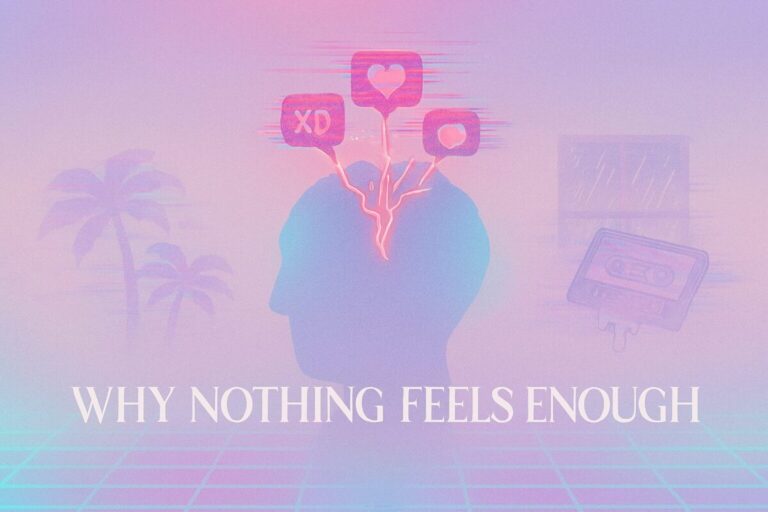
In a world built on instant gratification, satisfaction fades fast. This article explains why nothing feels enough anymore—and how to feel fulfilled again.
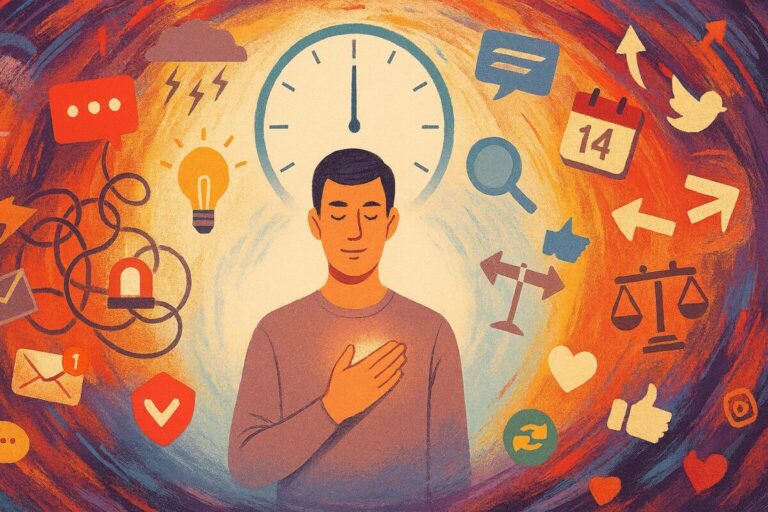
If you’re tired of getting stuck in your head every time you need to make a decision, this quick-read will change everything. These surprising, psychology-backed hacks show you exactly how to stop overthinking decisions and gain clarity in under 60 seconds—no stress, no mental chaos, just confidence.
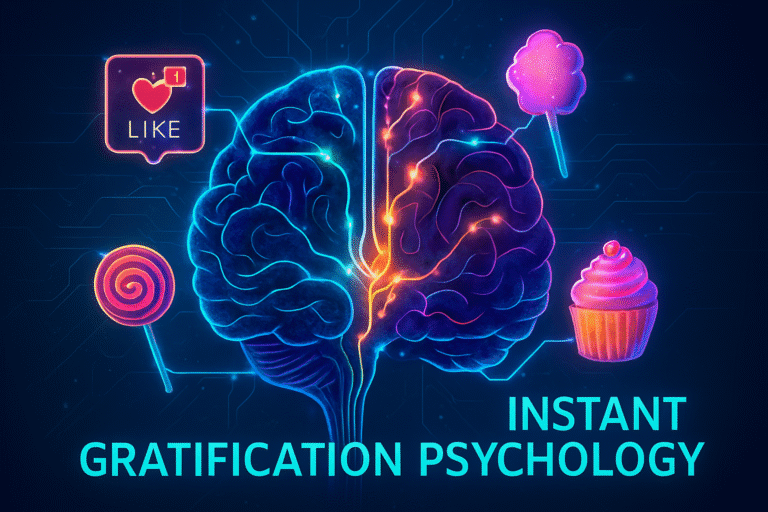
Why is waiting so hard? Instant gratification psychology reveals why our brains crave quick rewards—and how patience builds control, success, and happiness.
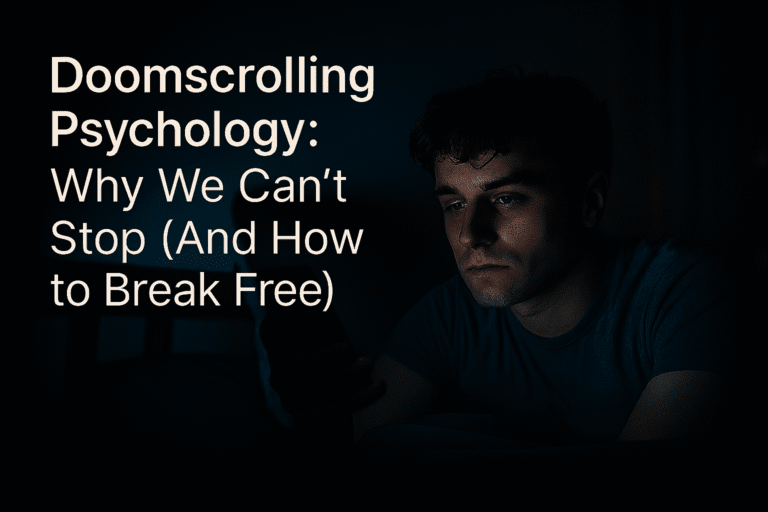
You’re in bed, vowing to yourself just a quick look at the news or social stream. Next thing you know, it’s 2 a.m., your heart aches, and your head is filled with wars, tragedies, disasters, and arguments from all over the world.
You mumble to yourself: “Why do I do this to myself?”
The cycle has a name. It’s not laziness, it’s not weakness—it’s doomscrolling psychology.
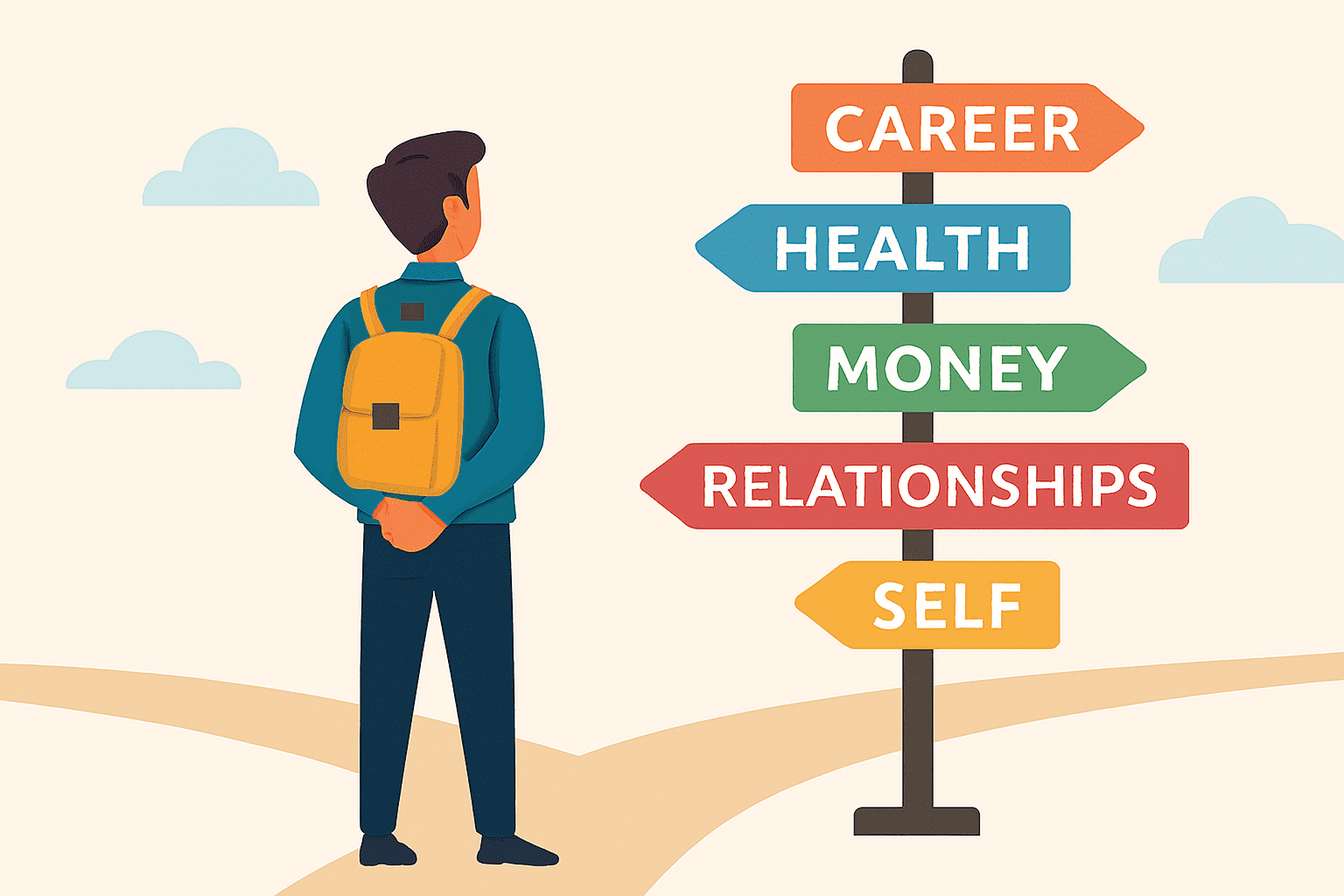
This unseen fatigue is not laziness. It’s a mental phenomenon called “decision fatigue”. And in today’s hyper-stimulated, option-ridden world, decision fatigue is quietly influencing the way we live, spend, work, and even love.
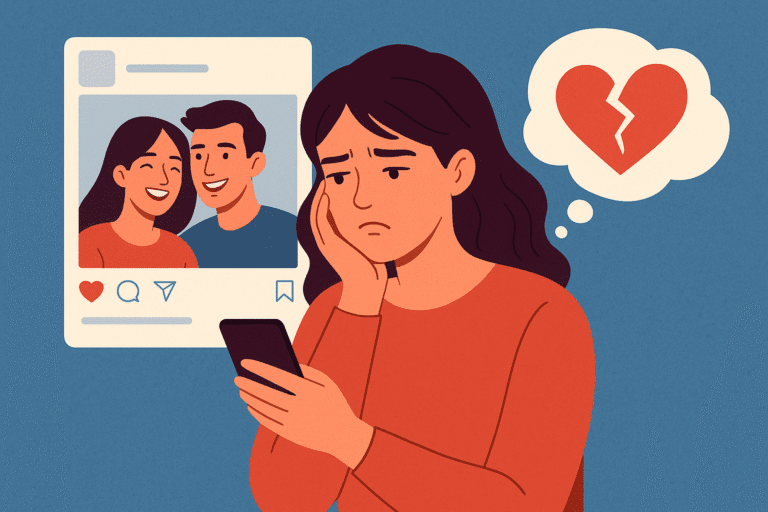
The illusion of social media. You’ve felt it before, haven’t you? That sudden drop in your chest while scrolling. You see a perfect photo, a dreamy vacation, a smiling couple, and for a split second… you wonder if you’re falling behind in life.

Welcome to the world of vantage sensitivity—a psychology concept gaining traction in 2025 for its profound implications on personal growth, emotional intelligence, and resilience.