Why I’m Feeling Lost Even When Life Is Fine
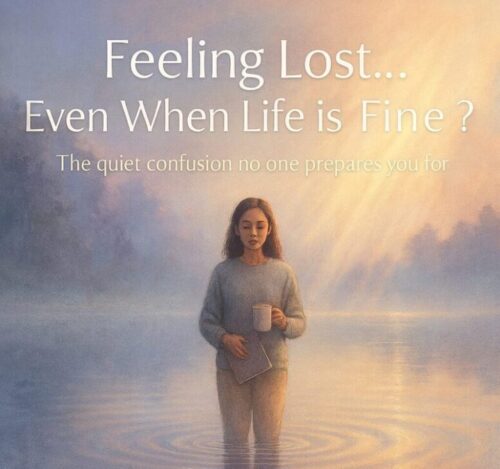
There are times when you look at your life from outside, and everything seems okay. Nothing is breaking up. There is no big crisis. You do what you are supposed to do. And yet, a silent confusion keeps nagging you.
You wake up, get through the day, talk to people, do your chores – but somewhere underneath it all, there’s a nagging feeling you can’t shake. A sense of being emotionally misplaced. A feeling of not fully belonging to the life you are living.
If you’ve ever found yourself feeling lost even when life is fine, you’re not imagining it. And you’re not alone.
This article isn’t here to fix you or rush you into clarity but to sit with that feeling, name it gently, and help you understand why that feeling exists – with no judgement, with no pressure.
Table of Content
Table of Contents
The Confusing Kind of Lost No One Prepares You For
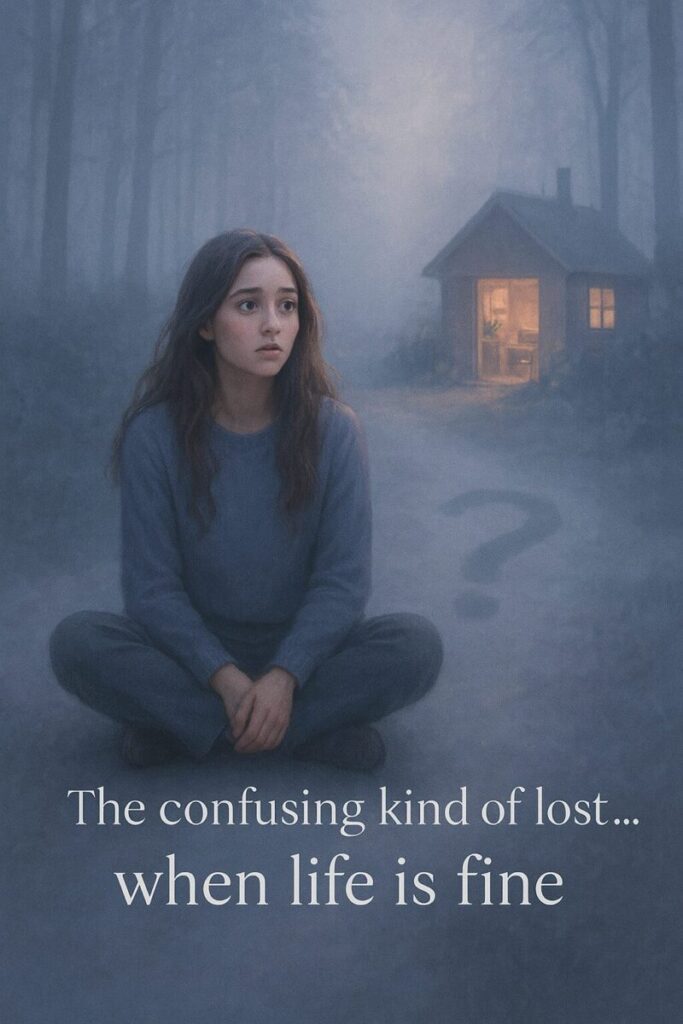
We only associate feeling lost with visible chaos—heartbreak, failure, sudden change, or major loss. But what happens when none of that’s present?
This kind of loss doesn’t come with any drama. It is a quiet show-up; it lingers in moments of stillness. It appears when you finally slow down enough to notice yourself.
You may be feeling lost even when life is fine, and the confusion you’re experiencing isn’t about circumstances; it’s about alignment.
Your outer life may be functioning smoothly, but your inner world is asking questions that haven’t been answered yet.
When “Everything Is Fine” Starts to Feel Heavy
“Fine” is the word we use when we do not want to explain ourselves. It’s convenient, socially acceptable, and safe. But over time, living in a constant state of “fine” can become emotionally exhausting.
You may not feel sad enough to ask for help or unhappy enough to make changes, but that doesn’t mean everything is okay. Emotional discomfort doesn’t need a dramatic reason to exist.
When one is feeling lost even when life is fine, it most often means he or she has come to a point where stability, expectations, or survival begin to bear greater significance than being emotionally honest.
This Feeling Is Not Ingratitude — It’s Awareness
Perhaps the biggest reason people struggle to talk about this experience is feelings of guilt. You might think that you don’t deserve to feel that way; others have it worse, and you must be grateful.
But recognition is not thanklessness.
Feeling lost doesn’t mean you hate your life; it means you’re noticing a gap between who you’re becoming and the life you’re currently living. That awareness is a sign of growth, not failure.
So many individuals are feeling lost even when life is fine, as they have outgrown the versions of themselves that once fit so perfectly.
Outgrowing a Life Without Realizing It
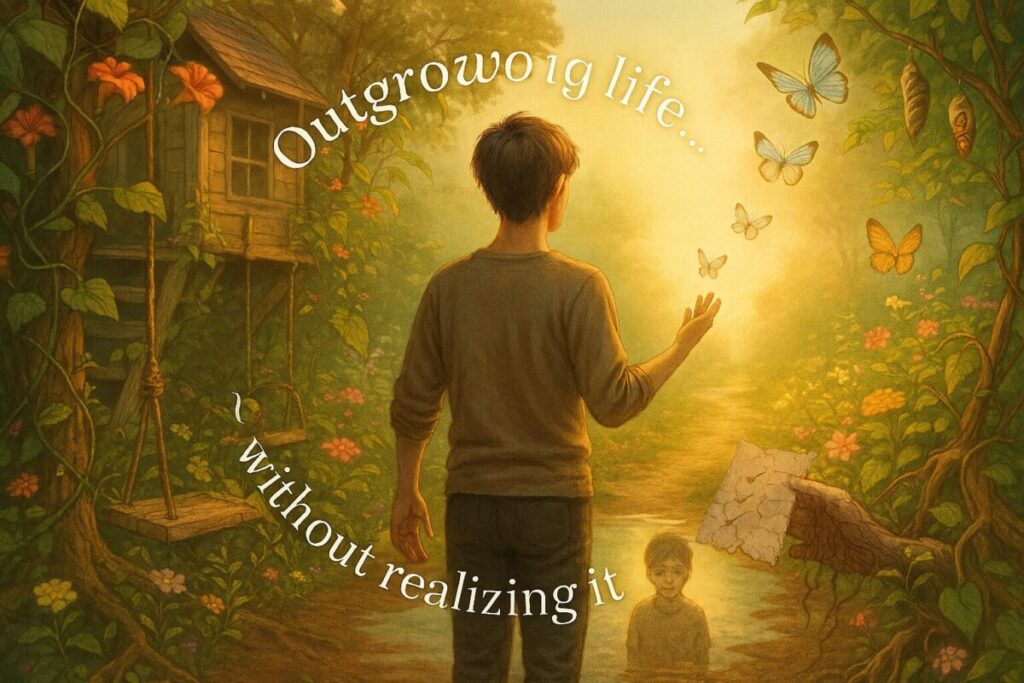
Growth rarely announces itself. It doesn’t have a clean endpoint or a clear bell. It happens quietly, in the background, when you’re too busy being responsible and practical.
You evolve emotionally. Your values change. Your needs change. But your routines, roles, and decisions stay the same.
That gap creates inner dissonance. And that dissonance often is felt as disconnection, restlessness, or emotional misplacement — even when nothing appears wrong.
This is one of the most major causes of feeling lost even when life is fine.
Why Distraction Stops Working
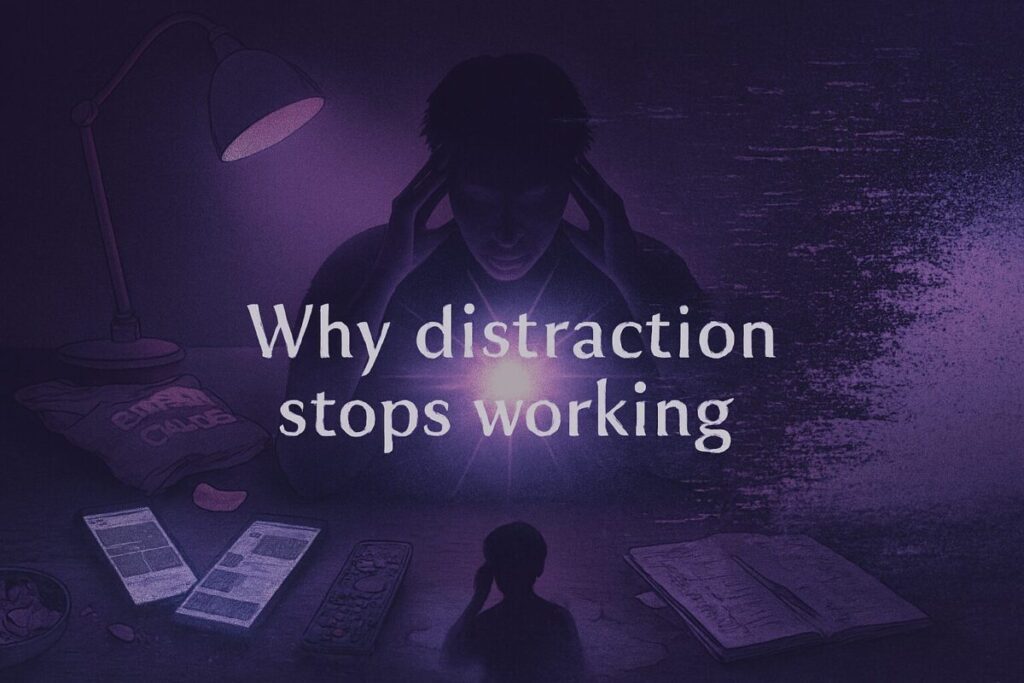
At first, you might try to avoid the feeling. You keep yourself busy. You scroll some more. You plan constantly. You fill your time so you won’t have to sit with yourself.
But this isn’t boredom. It’s not a lack of motivation. It’s not something you can distract your way out of.
At some point, distraction loses its effect, and people turn to small escapes — scrolling, binge-watching, or chasing instant pleasure — only to feel emptier afterward.
When you’re feeling lost even when life is fine, your mind isn’t asking for more stimulation. It’s asking for understanding.
Distractions delay clarity, but they don’t resolve it.
The Fear of Wanting Something Different
It is kind of scary to admit, however, that you feel lost. Because once you acknowledge it, you have to face what it might mean.
What if it means change?
What if it involves hurting people’s feelings?
What if it means giving up on an identity you have held onto for so long?
So, instead, you hang around in that grey area in between. Not unhappy enough to leave, not fulfilled enough to feel at peace.
This is emotional limbo, which is exhausting and a major reason people stay feeling lost even when life is fine for long periods of time.
When You Can’t Explain What You Want
The most frustrating part of this whole experience is not knowing what you want instead. You don’t have a clear alternative; you don’t have some kind of dramatic dream pulling you forward.
You know, that feeling in which something doesn’t feel right.
Clarity does not always precede honesty; sometimes, the most necessary step is admitting confusion without forcing answers.
Feeling lost even when life is fine does not mean that you are directionless; it means you are in a phase of reevaluation inside.
Emotional Backlog and Unprocessed Life
Life happens fast, and most of us are forced to adapt rather than process. We rush through changes, responsibilities, and transitions without necessarily feeling them.
Over time, emotions pile up quietly. Not in explosive ways, but in subtle heaviness. In fatigue that rest doesn’t fix. In confusion that logic can’t explain.
Many people cope with this emotional backlog in quiet ways — through music, solitude, or habits that help them process what words cannot.
This emotional backlog is oftentimes what fuels the experience of feeling lost even when life is fine.
The Cost of Being “Strong” for Too Long
If you have always been the capable one – the self-sufficient one – it may be even more challenging to identify this feeling.
You’re used to handling things. You don’t fall apart easily. You don’t ask for much.
But strength without reflection becomes emotional neglect.
When you’re constantly managing, coping, and pushing forward, you lose touch with what you actually need. And eventually, that disconnection shows up as feeling lost even when life is fine.
This Is Not a Setback—It’s a Pause
We live in a culture that is obsessed with forward motion. Uncertainty is commonly framed as failure or stagnation.
But what if this was not about falling behind?
What if it is a pause between versions of yourself?
So many people who are feeling lost even when life is fine are actually right in the middle of a quiet transformation, not a breakdown.
Learning to Listen Without Fixing
Well, the instinct to fix discomfort is natural. But not every feeling requires an immediate action.
Sometimes all that’s required is the act of listening.
Pay attention to what drains you.
Now notice what feels misaligned.
Observe what you keep avoiding.
It is in this gentle awareness that so many people find their first way out of feeling lost — not because it carries the answers, but because it builds honesty.
You’re Allowed to Outgrow What Once Worked
You’re Allowed to Outgrow What Once Worked
It’s okay if something that once fulfilled you no longer does. That doesn’t erase its importance. It doesn’t mean you failed.
Growth doesn’t invalidate the past. It builds on it.
The feeling of lostness is often the space between who you were and who you’re becoming. And that space deserves patience.
A Softer Way to Look at This Feeling
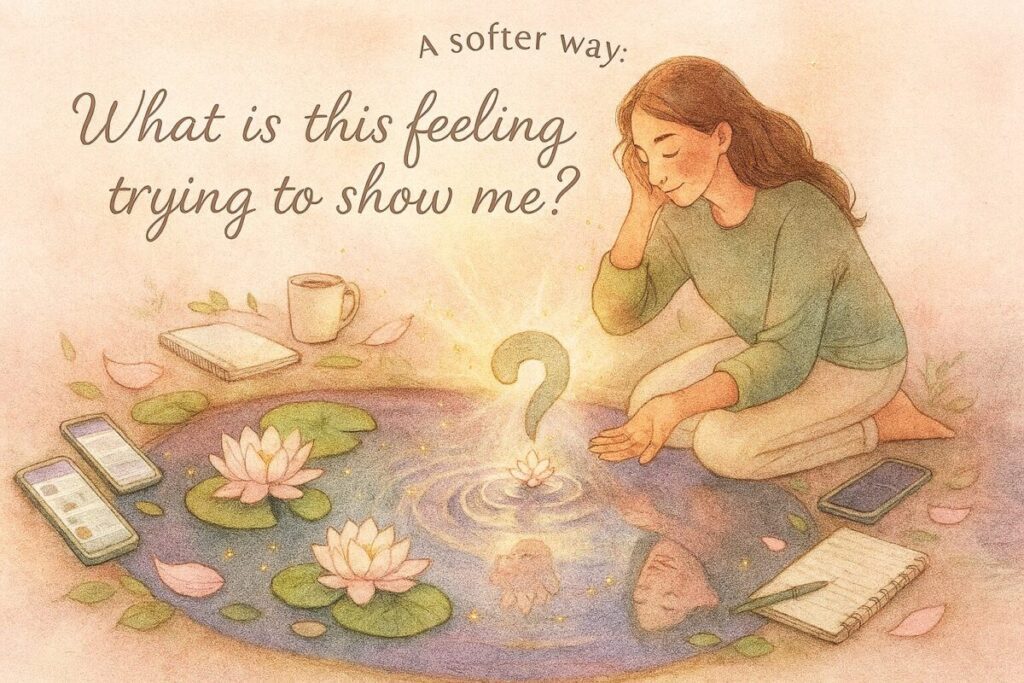
Instead of asking, “What’s wrong with me?” Try asking:
“What is this feeling trying to show me?”
Instead of thinking you are behind, reframe it to you are realigning.
If you’re feeling lost even when life is fine, it may be because you’re actually listening to yourself instead of silencing discomfort.
💌 A Final Note for You
If this article resonates deeply, it doesn’t mean something is wrong with you.
It means you’re paying attention.
And in a world that rewards constant motion and surface-level satisfaction, paying attention to your inner world is a revolutionary act.
You don’t need to have it all crystal clear right away.
You don’t have to explain the confusion.
You don’t need to rush this phase.
Sometimes, the best feeling of being lost doesn’t indicate that you’ve gone the wrong way; it means that you’re ready to choose more consciously. And that’s not something to be afraid of.