🌿 The Art of Gratitude: Daily Practices That Boost Happiness and Reduce Stress
Let’s be real here – life works at a faster pace than ever. Rushing from one thing to the next, always plugged in, always comparing. And yet, even though we have more than any generation before us, we often feel… less. Less joy, less peace, less presence. The reason isn’t that we don’t have enough good stuff to be happy; it’s just that we have forgotten how to notice.
This is where the art of gratitude quietly steps in. Not as a cliché self-help buzzword, but as a science-backed mindset that can transform how you experience your day. Gratitude doesn’t demand a perfect life – it teaches you how to see perfection in small, passing moments.
And that’s precisely what we are going to rediscover here: how the art of gratitude can help you boost happiness, reduce stress, and reconnect with your own inner calm.
Table of Contents
Table of Contents
🌸 Why Gratitude Is More Powerful Than You Think
We tend to confuse gratitude with a simple “thank you”, but the art of gratitude goes much deeper – it’s a subtle awareness that tunes you into what’s already working beautifully in your life, even on imperfect days. You’ll notice it first thing in the morning – how light your body feels when you start your day with appreciation instead of anxiety.
Here’s what happens when you make gratitude a daily habit:
- Your brain begins to be rewired, focusing on abundance rather than lack.
- Your stress hormones decrease, your body can relax, and you can recharge.
You become emotionally more resilient: less reactive, more peaceful, more grounded. - Relationships prosper since gratitude inspires empathy and closeness.
Psychologists term this the gratitude effect: a positive feedback loop between the mind and the body that nurtures happiness and health. Put more simply, the more you practise the art of gratitude, the more your brain learns to feel joy naturally – and the faster you’ll notice that peace becomes your default setting.
🧬 The Science Behind The Art of Gratitude
This isn’t just some “feel-good” idea; it’s neuroscience. In fact, studies out of both UC Davis and Harvard Medical School have shown measurable brain changes in people who consciously practise gratitude.
Research from the University of California found that people who practised gratitude journaling – even for just three weeks – showed:
| Change | Result |
|---|---|
| 25% increase | in overall life satisfaction |
| 20% decrease | in cortisol (stress hormone) |
| 30% improvement | in sleep quality |
When you practise the art of gratitude on a regular basis, you are activating the prefrontal cortex, that part of your brain where decision-making, emotional balance, and empathy reside. This quiets down the amygdala, your brain’s “alarm system”, resulting in less anxiety, less overwhelm, and more inner steadiness.
Next time you begin to spiral in stress or overthinking, remember: gratitude isn’t ignoring the pain; it’s redirecting your attention to peace.
How Gratitude is Used as an Art: Boosting Happiness
Happiness doesn’t always come from getting more. It often comes from noticing more – more sunsets, more laughter, more tiny kindnesses that usually slip by.
Gratitude is the art of teaching your brain how to stop, absorb, and appreciate.
Here’s how it changes your emotional chemistry:
- It builds optimism: you start expecting good instead of fearing bad.
- It increases self-worth: you realise your life already holds value.
- It nurtures contentment: you stop chasing and start savouring.
“Gratitude turns what we have into enough.”
When you stop measuring your joy by external success, you start feeling it from within — a kind that doesn’t rely on likes, money, or validation. That’s the real art of gratitude — joy that’s steady, not situational.
☀️ Daily Practices to Master The Art of Gratitude
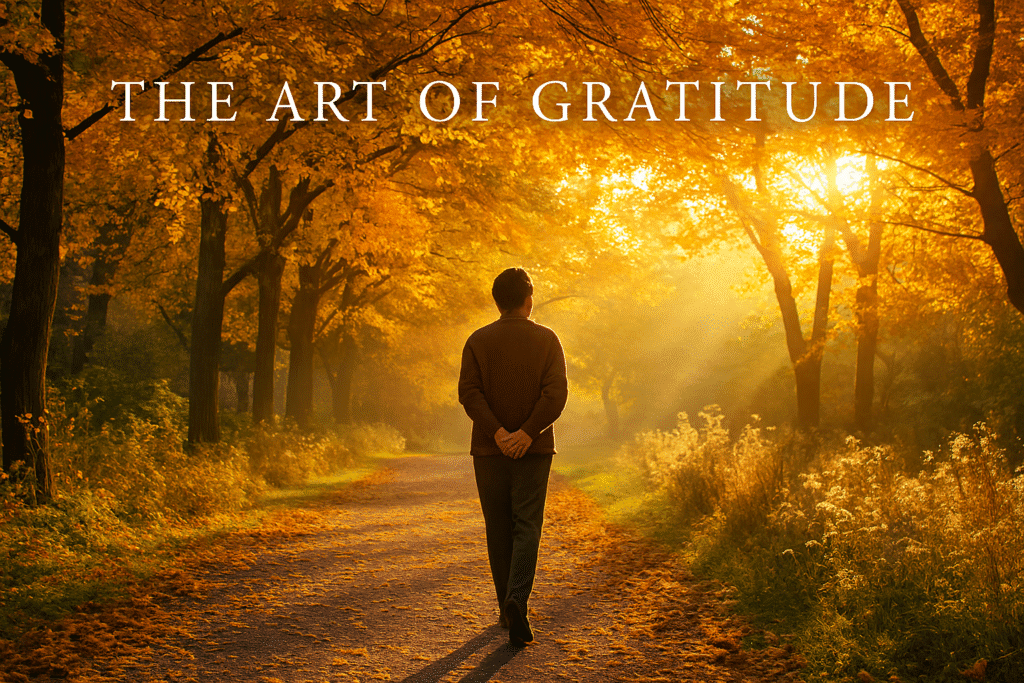
Let’s make gratitude less conceptual and more a habit. Here are some very practical, modern ways to weave in the art of gratitude into your daily life – no journaling pressure, no forced positivity, just small shifts that rewire your perspective.
1. The 3-3-3 Rule
Each morning, before checking your phone, list:
- 3 things you’re grateful for
- 3 people you appreciate
- 3 small things you look forward to today
It trains your mind to scan for joy before your brain gets hijacked by stress. Before you scroll, pause — gratitude first, world later.
2. The Gratitude Pause
Before you eat, check your phone, or open your laptop — pause. Breathe. Whisper “thank you.” Gratitude grows through repetition, and these micro-moments are powerful triggers.
3. Write One Message a Day
Send a note to a friend, parent, teacher, or colleague-a simple “I appreciate you.” Even a single “Hey, I was thinking of you today” is imbued with healing energy.
4. Gratitude Walks
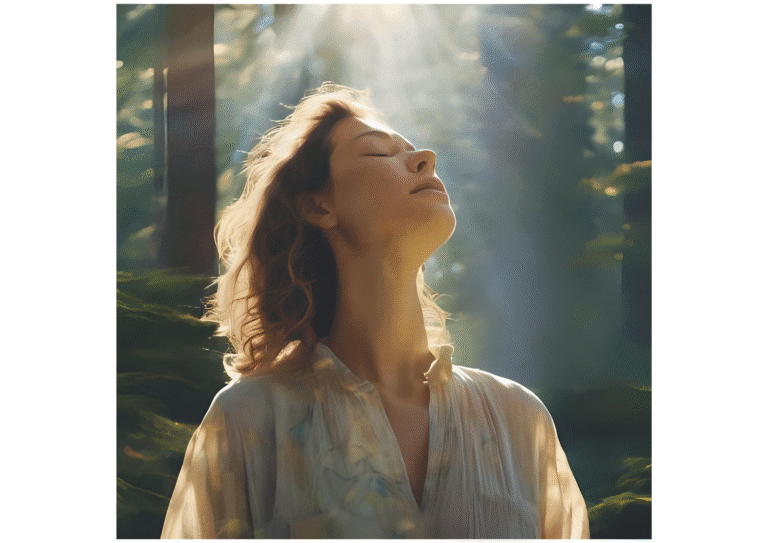
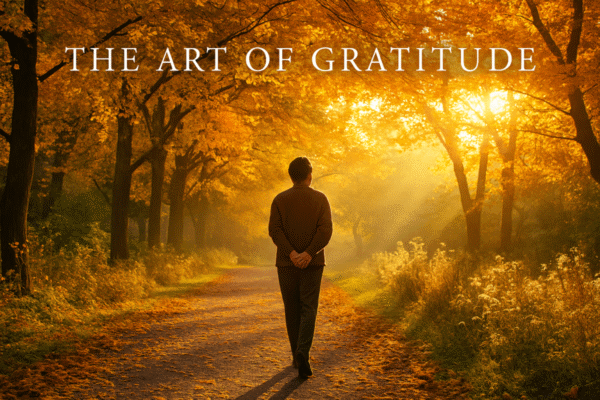
Walk in silence for 10 minutes and name the things around you that you’re grateful for: the sunlight, the breeze, the breath, and the rhythm of your body. Gratitude becomes embodied when you feel it through your senses.
5. Night Reflection Ritual
Before sleeping, think about one challenge that happened during the day — and find a reason you are grateful for it. This trains your brain to search for meaning within discomfort.
The real art of gratitude is not in avoiding problems but in finding small lights within them.
The Art of Gratitude in a Modern World
In a generation addicted to what’s next, gratitude roots you in what’s now. Instead of doomscrolling through negativity, try noticing one positive post — and really let it land. That single shift rewires your mental filter.
We scroll past hundreds of moments daily, yet few ever register. Why? Our attention has become a currency – always spent outward, rarely invested inward.
The art of gratitude in practice helps you regain that attention.
It shifts your energy from.
| From | To |
|---|---|
| Complaining | Appreciating |
| Comparing | Celebrating |
| Scarcity | Sufficiency |
| Reacting | Reflecting |
In other words, gratitude brings you back to yourself. The world may glorify hustle, but your soul craves harmony. Gratitude is that bridge between the two: it lets you stay driven and grounded.
🧘 The Art of Gratitude and Stress Reduction
Stress often comes from the illusion of lack: not having enough time, money, control, or certainty. But when you embrace the art of gratitude, your inner dialogue changes.
- Instead, of saying, “I have so much to do.”
- You start to think, “I get to do things that matter.”
- Instead of: “I wish I had more.”
- You shift to: “I already have what I once wished for.”
This reframing is not denial; it is empowering. Gratitude offers your nervous system a signal of safety. When the mind feels safe, the body’s overproduction of cortisol stops, one’s breathing slows down, and the heart rate relaxes.
That’s why gratitude isn’t just emotional — it’s physiological healing in motion.
🌻 Emotional Intelligence and The Art of Gratitude
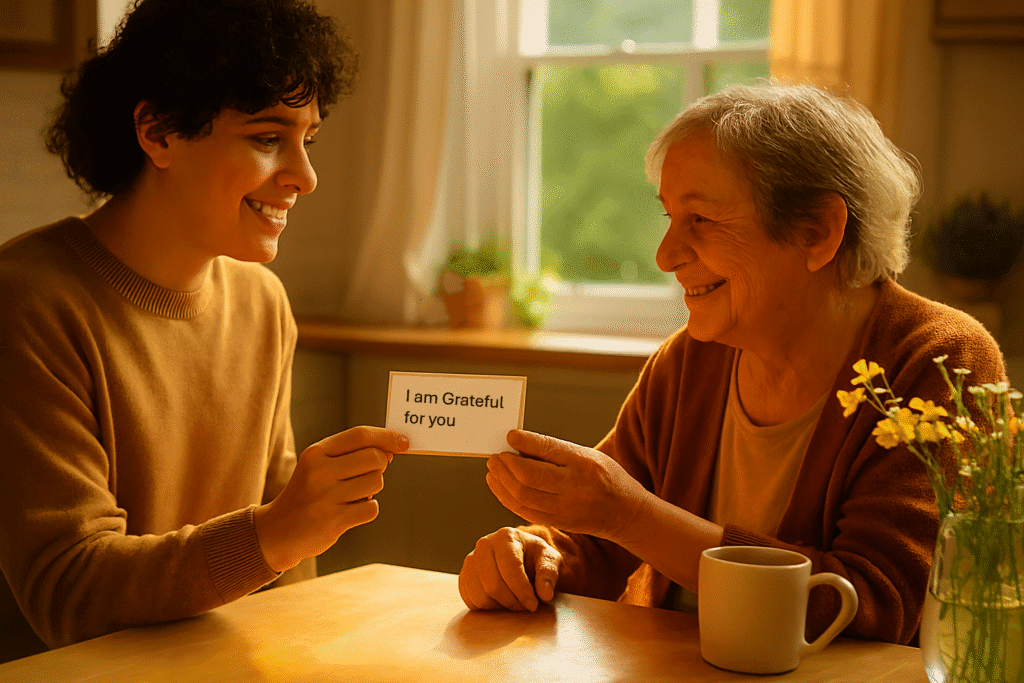
Gratitude deepens your emotional intelligence because it trains you to recognise emotions — in yourself and others — without judgement.
When you feel grateful, you automatically become more:
- Empathetic – You sense others’ emotions more clearly.
- Patient – You respond instead of react.
- Self-aware – You are aware of your own emotions.
Gratitude is magnetic in relationships. A simple “I appreciate you” can heal what arguments couldn’t.
It turns teams into communities at workplaces.
And within yourself, it silences the inner critic that says “not enough”.
That’s the higher frequency of the art of gratitude – in no way superficial positivity, but emotional maturity that radiates calm.
🔎 Gratitude: Separating Fact from Fiction
| Myth | Truth |
|---|---|
| Gratitude means ignoring problems | Gratitude helps you process them from a healthier mindset. |
| You must always be positive | Gratitude allows both joy and pain to coexist. |
| You need big reasons to be thankful | The small ones often carry the biggest healing. |
| Gratitude is a personality trait | It’s a muscle — and anyone can train it. |
When you realise this, gratitude stops feeling like an obligation and more like permission — the permission to stop, feel, and breathe again. Remember, it’s okay to be grateful and grieving — both can coexist beautifully.
🌼 Integrating The Art of Gratitude Into Your Lifestyle
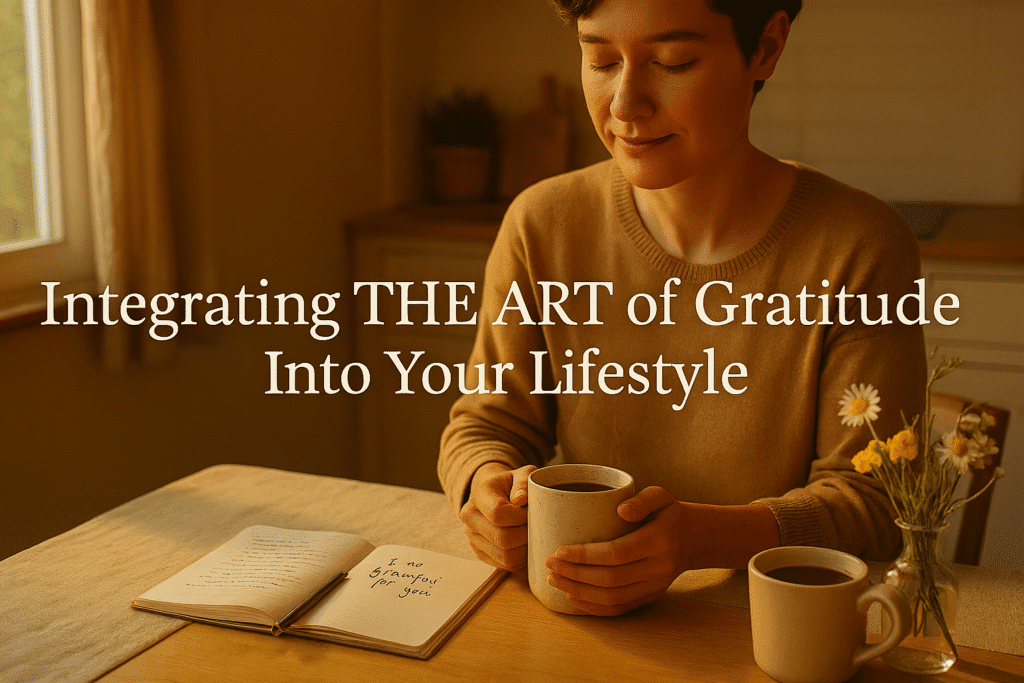
Let’s get real. Gratitude is not another thing to add onto your to-do list – it’s a lifestyle rhythm.
You can infuse the art of gratitude in everything you do:
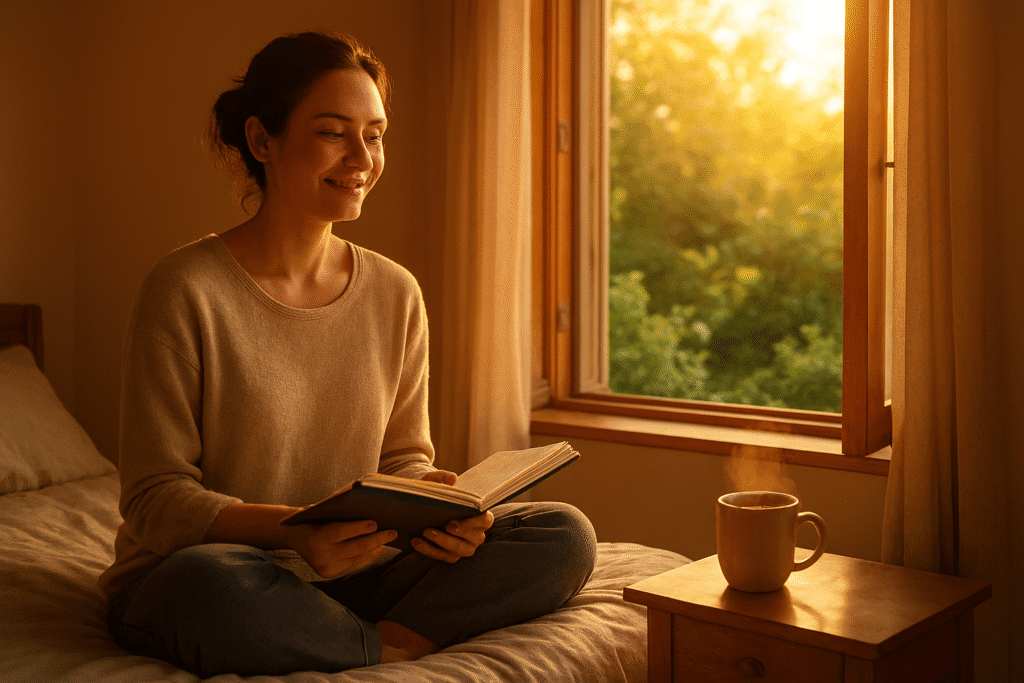
- Morning coffee ritual: Take that first sip in silence and notice its warmth, aroma, stillness — that’s micro-gratitude in motion.
- Digital detox: Once a day, replace scrolling with reflecting – what went right today? (You can read my guide on “Digital Detox Secrets” for deeper balance.)
- Self-talk upgrade: Whenever your mind says “I failed,” immediately respond with “I learned.”
- Weekly reset: Every Sunday, note one new lesson, one act of kindness, and one memory you want to keep.
The small moments, viewed through the lens of gratitude, become sacred.
“The art of gratitude doesn’t change your world overnight; it changes how you see the world, which changes everything.”
❤️ From My Heart to Yours
If life has felt too fast, too loud, or too heavy lately, pause. You don’t have to fix it all today. You only have to notice one thing that is already beautiful, already enough, already yours. That’s how the art of gratitude begins – not with perfection, but with presence 💌.
Comment below on one thing you’re grateful for today – let’s create a ripple of gratitude together.
Try one of these daily gratitude practices tonight. Not for productivity nor performance — but to reconnect with your inner compass. Because beneath the noise, your heart already knows how to find peace.
🌿 Quick Recap
| Core Idea | Why It Matters |
|---|---|
| Gratitude is awareness, not a checklist | Helps shift your mindset from lack to abundance |
| It rewires your brain | Reduces stress and anxiety, boosts happiness |
| Small daily habits create long-term peace | Sustainable emotional balance |
| Emotional intelligence grows through gratitude | Strengthens empathy and resilience |
🌸 Final Note: The Ripple of Gratitude
The art of gratitude is contagious. When you live with appreciation, you unconsciously give others permission to do the same. It’s how peace spreads-not through perfection, but through presence. So start small, be consistent, and observe how gratitude quietly rewrites the story of your days. And if you’re curious, delve deeper into my other reflections in Inner Compass to keep your heart aligned with calm.