
Instant Gratification Psychology: Why We Crave Now, and How to Win at Waiting
The Difficulty of Waiting
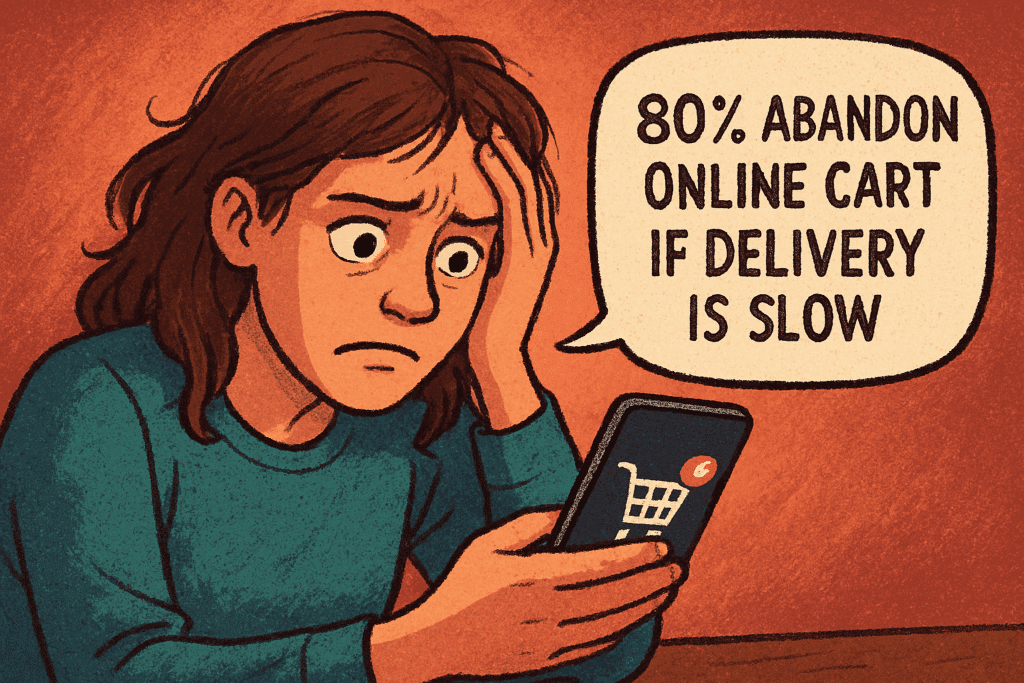
Or did you know that a majority of people-80% or more-abandon their online shopping carts if the estimated delivery time is longer than a few days? Everything needs to be faster, from responses and rewards to results. But beneath this urgency lies a fascinating truth: our brains are wired to resist waiting. Instant pleasure feels good; patience feels like pain.
So why is waiting an agony? Why is instant gratification psychology so powerful it shapes the way we eat, shop, scroll, and even think? Most importantly, how can you retrain your mind to pause, resist the rush, and find balance in a world built for immediacy?
In this article, you will find the hidden science behind why waiting feels like torture, the role of instant gratification psychology in everyday life, and some practical, scientifically-backed ways to strengthen your patience and self-control.
Table of Content
Table of Contents
🔍 What Is Instant Gratification Psychology and Why It Matters
Instant gratification psychology is the term used to describe humans’ preference to have a reward now rather than later—despite the possibility that waiting might result in a better outcome. This is not a new behaviour; it is hardwired in our brain and tied to survival.
Key Points:
- The pleasure centre of our brain (nucleus accumbens) releases the “feel-good” chemical called dopamine each time we receive a reward.
- Technology in today’s world fuels this wiring. Smartphones, social media, and instant- gratification services keep offering instant rewards.
- The pursuit of immediate pleasure is not inherently problematic, but excessive indulgence can wreak havoc on mental health, productivity, and long-term success.
“The ability to delay gratification is the single most important predictor of future success.” – Walter Mischel, Stanford Psychologist
Why Waiting Feels Hard(and What Happens Inside Your Brain)
Waiting isn’t simply irritating—in instant gratification psychology, it initiates a multifaceted psychological reaction that feels tense or even painful. Here’s why:
1. Dopamine and Reward Systems
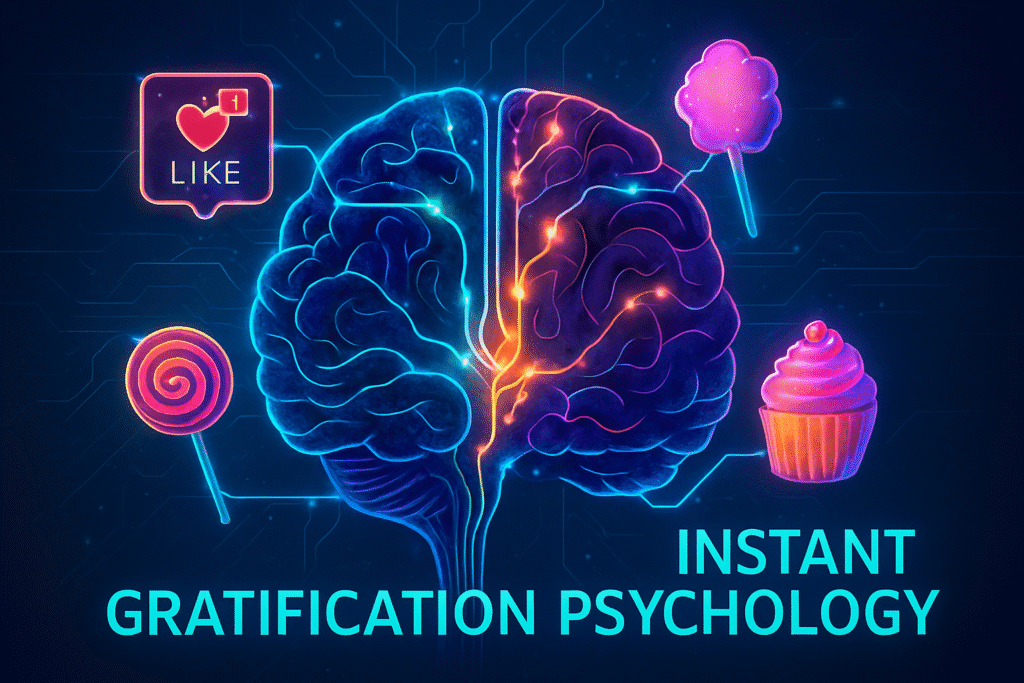
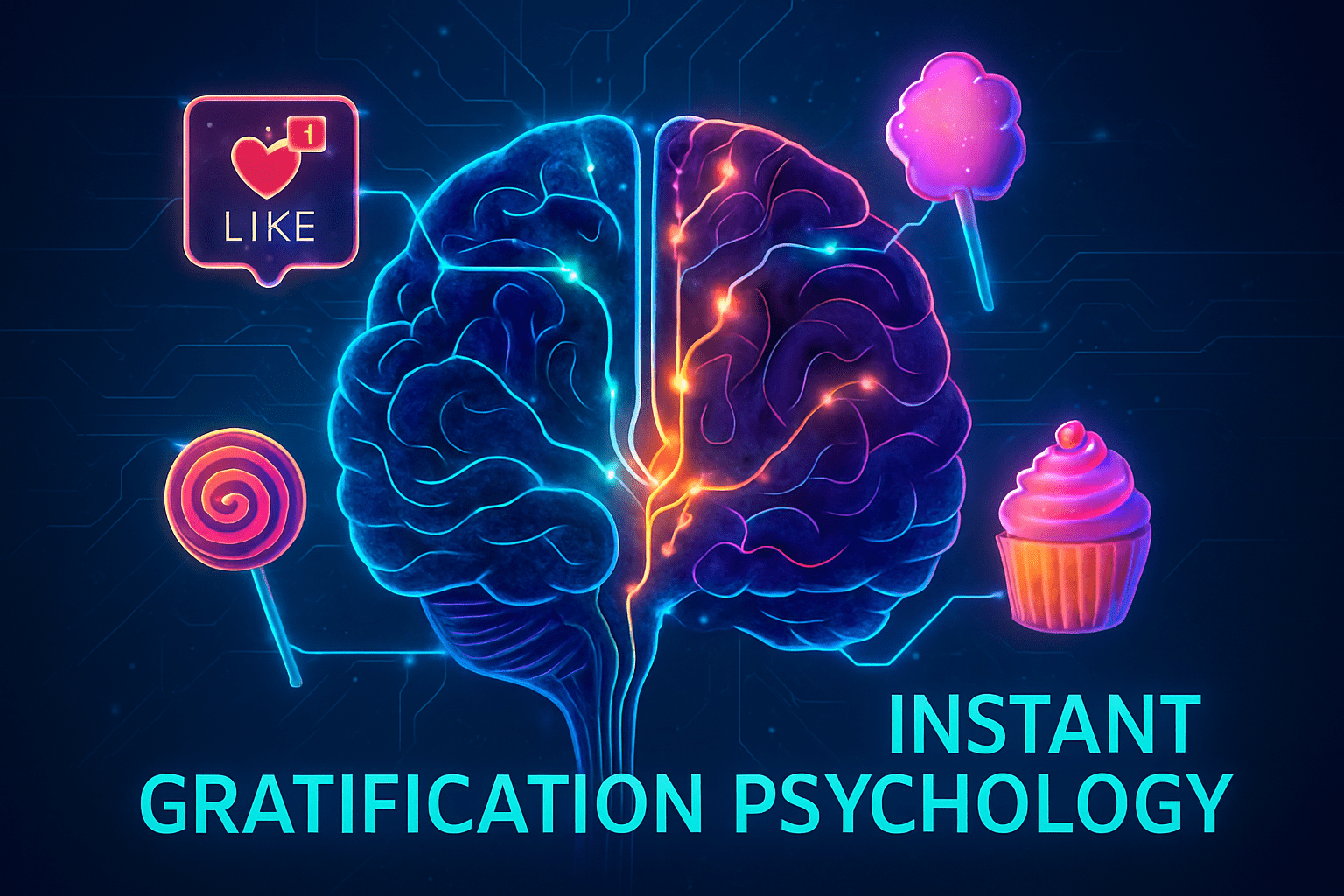
Each time you experience an instant reward—such as a “like” on a social media site or a tasty piece of chocolate—your brain responds by dispensing dopamine. Dopamine is addictive, and our brains begin to crave it with increasing frequency. In instant gratification psychology, dopamine explains why we want rewards now instead of later.
Dopamine Response:
| Action | Dopamine Effect | Psychological Impact |
|---|---|---|
| Checking social media | High spike | Craving for constant validation |
| Consuming sweets | Moderate spike | Temporary pleasure, craving for sugars |
| Achieving a goal after waiting | Gradual increase | Sense of accomplishment, longer-lasting satisfaction |
Over time, instant rewards train our brain to avoid delays, making waiting feel uncomfortable and anxiety-inducing.
2. Anxiety and the Fear of Missing Out (FOMO)
Waiting tends to cause anxiety. Not knowing what will happen has the potential to keep us on edge. Modern life intensifies this with FOMO—the fear that we’ll miss out if we don’t act immediately.
- Social media puts others’ successes in front of us in real time, making us feel behind.
- Online shopping displays limited-time deals, pushing the need for instant action.
3. How Modern Life Trains Us to Expect Instant Results
Technology has reoriented our patience for delay. Streaming, online shopping, and instant messaging are enabled by immediacy. Our minds have adjusted, and even a small delay of seconds can be frustrating.
Example:
Think about ordering takeaway food online and waiting 10 minutes for it to arrive—it’s an eternity compared to the instant streaming of your favourite TV show.
The Psychology Behind “I Want It Now”: Understanding Impulsive Behavior
Knowing the psychological processes can help you rationalise your urges.
1. Hyperbolic Discounting
Human beings tend to prefer immediate rewards disproportionately greater than rewards that have a delay, a process called hyperbolic discounting.
- Getting $50 now is more desirable than getting $100 in a month, even when waiting gives a better result.
- That is why individuals binge-watch television shows or spend recklessly even though they realise it’s not the best thing to do.
2. Ego Depletion
Have you ever noticed that it’s harder to resist junk food or stay focused after a long day of making decisions? That’s ego depletion in action. It means your self-control works like a battery—it drains a little every time you make a choice. The more decisions you make, the weaker your willpower gets, and suddenly scrolling endlessly, snacking, or shopping feels irresistible.
3. Immediate Feedback Loops
The brain feeds on immediate feedback. Social media likes, shopping updates, and video game scores are all instant validation, and waiting for delayed gratification becomes unfulfilling.
How Instant Gratification Psychology Shows Up in Everyday Life
Reading real-life situations helps us connect and be able to identify the patterns in our own lives.

> Example 1: The Social Media Trap
Scrolling perpetually through feeds, liking posts, or inspecting notifications—our brains need the instant rush of dopamine. Every notification is a small reward, keeping the behaviour in play.
Tip: Establish app limits or “digital fasting” intervals to get your brain used to waiting for rewards.
> Example 2: Eating and Health Choices
Imagine you’re on a diet, and someone offers a slice of cake. Your brain’s instant gratification psychology wiring urges you to eat it, but waiting and resisting aligns with long-term health goals.
Tip: Practise mindful eating. Recognise cravings without immediately acting on them.
> Example 3: Financial Decisions
Spending impulsively on things or experiences is gratifying in the moment, but saving for several months is more satisfying in the long term. Delayed gratification in money matters is essential to building wealth.
“Don’t trade what you want most for what you want now.”
Why Delayed Gratification Feels Hard—but Always Pays Off
Delayed gratification is waiting for a greater, usually more fulfilling reward to come later by forgoing immediate pleasure. In instant gratification psychology, resisting impulses feels uncomfortable at first—but the long-term gains are undeniable.
Benefits:
- Better self-control: Building willpower affects every part of life.
- Long-term satisfaction: Delayed rewards have a more profound satisfaction.
- Better mental health: Patience minimises stress and reckless decision-making.
Example:
Saving for a dream trip seems more difficult now, yet the final result is much more satisfying than any momentary luxury.
Strategies to Combat the Instant Gratification Trap
Though life in the modern age keeps tempting us, there are strategies to rewire your mind and build endurance.
Here’s how you can retrain your brain against instant gratification psychology traps:

1. Break Goals into Micro-Rewards
Rather than taking months to be rewarded, set up tiny, incremental rewards along the way.
Example:
Prepping for a certification test? Give yourself a brief reward or snack for every milestone reached rather than waiting for the last exam.
2. Practice Mindfulness
Mindfulness enables you to watch impulses without acting on them in the heat of the moment. Methods include:
- Deep breathing prior to reacting to cravings
- Meditation to build attention and dampen impulsive responses
- Mindful reflection on whether an action aligns with long-term goals
3. Reframe Waiting as Anticipation
Shift your mindset. Instead of seeing waiting as painful, view it as building excitement. Anticipation can amplify pleasure when the reward arrives.
Example:
Think of waiting for a concert you’ve been planning for months—the delayed gratification intensifies the joy of the experience.
4. Reduce Exposure to Instant Triggers
Identify and limit triggers that encourage impulsive behaviour:
- Remove unnecessary programmes.
- Turn off push alerts
- Stay away from settings that facilitate wasteful spending or snacking
5. Build Your Self-Control Muscles
As with physical exercise, self-control develops through practice:
- Begin with little projects that call for patience, such as resisting a small purchase
- Gradually raise the level of difficulty as your patience increases
- Praise achievements to reinforce good habits
Instant Gratification in the Digital Age: How Technology Rewires Your Brain
New technology increases the demand for instant rewards:
- Streaming services: Binge-watching promotes immediate enjoyment over paced satisfaction.
- Social media: Comments, shares, and likes provide continuous feedback loops.
- E-commerce: Click-to-buy provides instant gratification of desires.
Practical Tip: Set “technology breaks” to minimise dependence on digital instant reward and develop tolerance for delay.
⚖️Balancing Instant and Delayed Gratification
It’s unrealistic—and unnecessary—to eliminate instant gratification entirely. The goal is balance:
- Indulge in small pleasures without sidetracking long-term objectives
- Prioritize substantial rewards over short-term ones
- Develop systems that reward delayed gratification with the permission of infrequent indulgence
Points to remember:
- Treat yourself wisely
- Budget for more significant objectives
- Consider your decisions and their outcomes regularly
🌿Closing Thoughts
Instant gratification psychology isn’t weakness—it’s knowledge about how your mind operates within a speed-designed world. Being aware of your impulses, being mindful, and intentionally postponing rewards can increase mental clarity, productivity, and satisfaction with life.
🧠Key Takeaways: What Instant Gratification Psychology Teaches Us
• Your brain isn’t lazy—it’s just wired for quick rewards. Instant gratification psychology shows how dopamine drives your craving for quick hits of pleasure—from a text ping to that tempting snack.
• Technology feeds impatience. One-click shopping, streaming, and social media loops keep your mind addicted to “now,” making patience feel unnatural.
• Self-control isn’t a gift—it’s a skill. Think of patience like a muscle: every time you resist an impulse, you strengthen your inner discipline.
• Mindfulness is your secret weapon. When you pause before reacting, you break the automatic cycle that fuels instant gratification behavior.
• Small rewards make big goals sustainable. Micro-rewards satisfy your brain’s need for progress without derailing your long-term vision.
• Balance beats perfection. You don’t have to reject every instant pleasure—just learn when to enjoy it and when to wait.
• True satisfaction grows with time. Lasting happiness comes from the deeper fulfilment that delayed gratification brings, not from the momentary dopamine rush.
💌 Last Note from Me:
Life always seems to be moving too quickly, luring us with constant instant gratification. True growth, happiness, and fulfilment result from learning to stop, catch your breath, and wait. Each minute of patience you practise today builds your capacity to gain the deeper, richer returns tomorrow. Keep in mind, what you desire most may be worth waiting for.



2 Comments