
5 Breathing Technique To Calm Your Nervous System Instantly
You’ll Never Feel Overwhelmed Again — Here’s How
Stress, anxiety, and overwhelm have become nearly daily friends for all of us. Whether it is work deadlines, family commitments, traffic, or personal anxieties, the nervous system tends to feel perpetually in overdrive. You sense your heart pounding, your mind racing, and your body tense—but the question is, how can you instantly calm your nervous system?
Come on in and use breathing techniques to calm your nervous system. Breath is the only tool that you will always carry with you, but most of us do not realise how much power it has. In just a few minutes of conscious breathing, you can change your body from a “fight-or-flight” state to a relaxed, centred, and calm state.
These aren’t just trendy wellness tips—they are backed by science and endorsed by psychologists, yoga experts, and wellness coaches. In this article, you’ll discover 5 powerful breathing techniques that calm your nervous system instantly, step-by-step instructions for each, expert insights, and a real-life story showing just how transformative conscious breathing can be.
Table of Content
Table of Contents
How Breath Influences Your Nervous System: Top Breathing Techniques
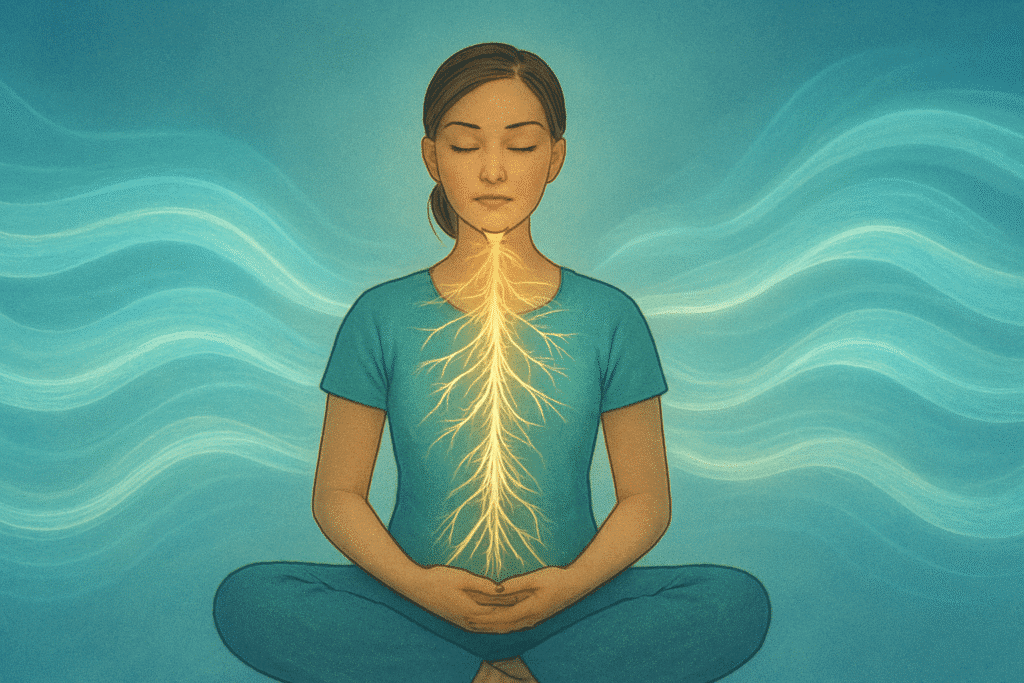
Before diving into the techniques, it’s helpful to understand why breathing can calm your nervous system instantly.
Your Autonomic Nervous System (ANS) has two main branches:
1. Sympathetic Nervous System (SNS) – triggers the “fight-or-flight” response.
- Symptoms: rapid heartbeat, shallow breathing, tense muscles, racing thoughts.
2. Parasympathetic Nervous System (PNS) – activates the “rest-and-digest” state.
- Symptoms: slower heartbeat, deeper breathing, relaxed muscles, and mental clarity.
The connection between these two conditions? Your breathing. As opposed to your heart rate or the function of your digestive system, you can control your breathing consciously, which in turn tells your nervous system to unwind. Essentially, by employing breathing techniques to calm your nervous system, you’re essentially saying to your body, “It’s safe to relax now.”
Use the following breathing techniques to calm your nervous system during sudden anxiety, before presentations, or at bedtime.
1. Box Breathing — The Navy SEAL Secret
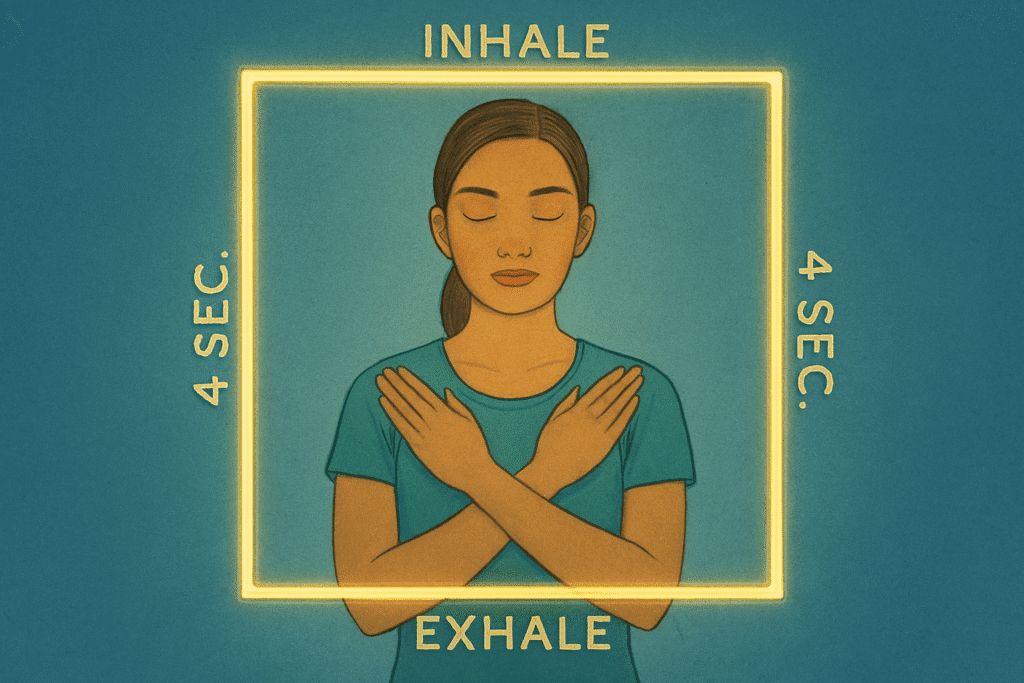
Box breathing, or square breathing, is a method employed by top athletes, military personnel, and high-pressure professionals to immediately take back control.
> How to do it:
- Breathe in deeply through your nose for 4 seconds.
- Hold breath for 4 seconds.
- Slowly exhale through the mouth for 4 seconds.
- Hold once more for 4 seconds.
- Repeat 4–6 cycles.
> Why it works:
- Establishes a consistent pattern that engages the PNS (parasympathetic nervous system).
- Slows down heart rate and enhances oxygen exchange.
- Reduces cortisol (stress hormone) within minutes.
> Where to use it:
- Before presentations or exams
- While stuck in traffic
- Before bed
Pro tip: Imagine a square while breathing to make it more meditative.
2. 4-7-8 Breathing — The Natural Tranquiliser
Dr Andrew Weil popularised the 4-7-8 breathing technique, which is also referred to as a “natural tranquiliser” for the nervous system.
> Steps:
- Breathe in quietly through your nose for 4 seconds.
- Hold your breath for 7 seconds.
- Slowly breathe out through the mouth for 8 seconds.
- Repeat 4 cycles first, increasing gradually as you become comfortable.
> Benefits:
- Slows down racing thoughts
- Encourages profound relaxation
- Helps with improved sleep
“The 4-7-8 breathing technique works by increasing parasympathetic activity, which reduces sympathetic overdrive almost immediately,” — Dr. Laura Feldman, a behavioural psychologist.
Tip: Practise this method at bedtime or in case of unexpected panic attacks in order to soothe the nervous system immediately.
3. Alternate Nostril Breathing — Nadi Shodhana
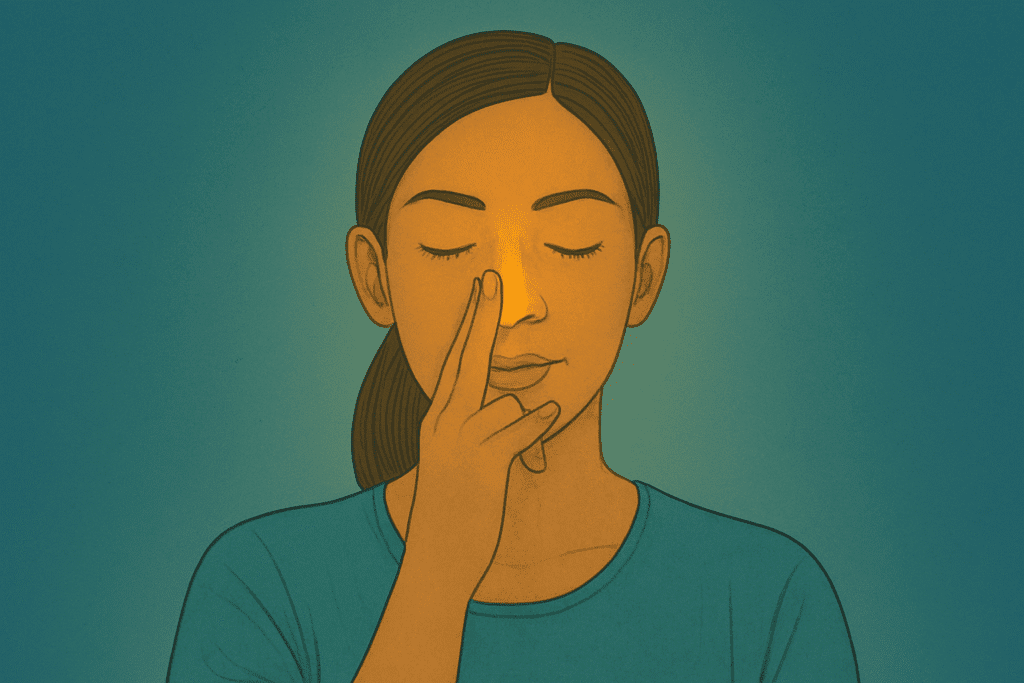
An ancient yogic breathing exercise, alternate nostril breathing (Nadi Shodhana) harmonises the left and right hemispheres of the brain.
> How to do it:
- Sit comfortably, back straight.
- Use your right thumb to close your right nostril.
- Breathe in slowly through your left nostril.
- Place your ring finger on the left nostril and close it.
- Breathe out through the right nostril.
- Breathe in through the right, close it, and breathe out left.
- Repeat 5–10 times.
> Why it works:
- Balances energy flow
- Relaxes anxiety and mental clutter
- Eases heart rate and muscle tension
Pro tip: Use early morning or when you need a quick mental reset.
4. Resonance Breathing — 6 Breaths Per Minute
Resonance breathing is breathing at an even rate to induce physiological coherence, enhancing heart rate variability (HRV), a measure of an optimal nervous system.
> Steps:
- Breathe in for 5.5 seconds.
- Breathe out for 5.5 seconds.
- Repeat for 5–10 minutes.
> Benefits:
- Immediately lessens stress and panic
- Enhances concentration and mental clarity
- Enhances emotional balance
Tip: Utilise a timer app with a soft bell to maintain rhythm without counting.
5. Diaphragmatic Breathing — The Foundation
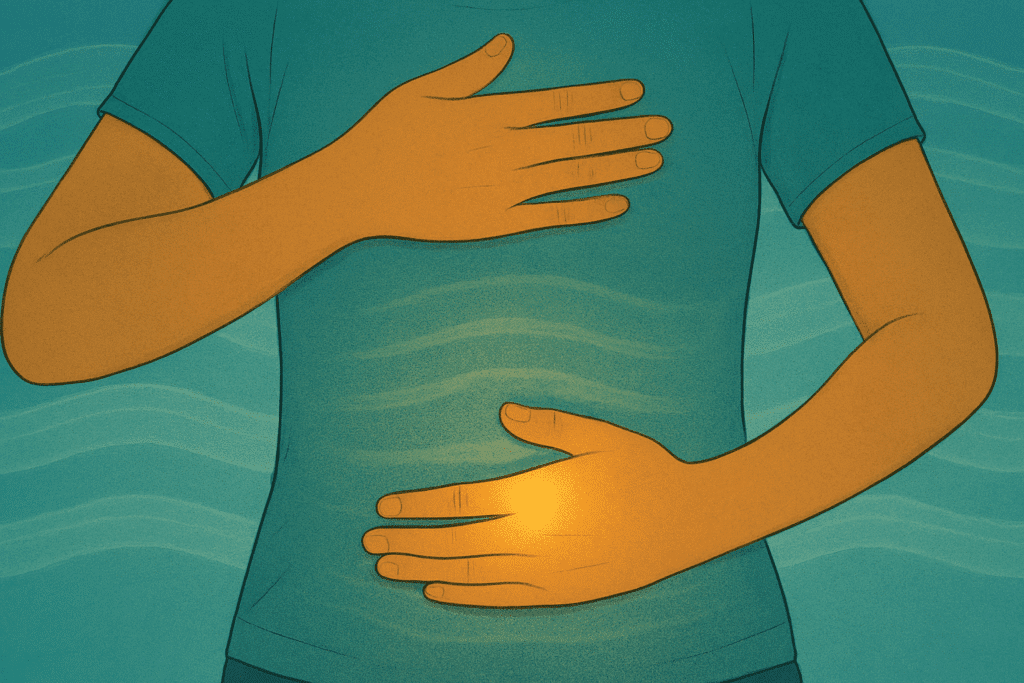
Most individuals breathe shallowly, maintaining high stress levels. Diaphragmatic breathing instructs complete oxygen exchange, naturally soothing the nervous system.
> How to practice:
- Lie down or sit comfortably.
- Position one hand on the chest, the other on the belly.
- Breathe deep through the nose, sensing the belly rise.
- Slowly exhale through pursed lips, sensing the belly fall.
- Do 5–10 minutes each day.
> Why it works:
- Stimulates the vagus nerve
- Reduces blood pressure and heart rate
- Immediately activates the relaxation response
Tip: Pair with visualisation (picture stress leaving your body with every exhale) for quicker effects.
Rapid Comparison of Breathing Techniques to Calm your Nervous System
| Technique | Best Use | Duration | Immediate Effect |
|---|---|---|---|
| Box Breathing | Stressful situations | 4–6 cycles | Reduces heart rate & cortisol through breathing techniques to calm your nervous system |
| 4-7-8 | Sleep/Panic | 4–8 cycles | Deep relaxation & mind calm |
| Alternate Nostril | Morning or mid-day reset | 5–10 cycles | Balances brain hemispheres |
| Resonance Breathing | Work or study breaks | 5–10 minutes | Improves HRV & focus |
| Diaphragmatic | Daily routine | 3–5 minutes | Activates PNS & eases tension |
Expert Insights on Breathing & Stress
“Breath is the bridge between body and mind. By regulating breath patterns, you can control emotional responses and calm the nervous system almost immediately.” — Mark Jefferson, Travel & Wellness Consultant
“Breathing techniques are easy, cost-free, and available tools for anyone who desires to decrease anxiety, increase attention, and increase overall health.” — Dr Susan Carter, Psychologist
Scientific evidence also substantiates the same. Studies demonstrate that intentional breathing:
- Increases parasympathetic nervous activity
- Decreases cortisol and adrenaline
- Facilitates better heart rate variability
- Increases emotional resilience
Practising breathing techniques regularly can help reduce stress hormones, improve heart rate variability, and bring instant focus.
Real-Life Story: When Breath Saved the Day
The last time, I was to address a key conference. With minutes to appear on stage, my anxiety reached an all-time high—racing heart, shaking hands, wild thoughts.
I retreated to a secluded corner and did Box Breathing for a mere 3 minutes. The impact was near-immediate. My heart rate dropped, thoughts clarified, and I took the stage feeling relaxed, centred, and absolutely in command.
On this day, I saw how empowering calming breathing techniques that immediately soothe your nervous system can be. It’s not an idea; it’s a real, life-altering technique.
How to Make Breathing a Habit Every Day
- Use reminders: phone alarms, sticky notes, or apps to cue mindful breathing.
- Begin small: 1–2 minutes every day creates the habit.
- Associate with routine: With morning coffee, during lunch break, or as a bedtime routine.
- Monitor progress: mark increased focus, sleep, or calmness.
- Mix techniques: use diaphragmatic breathing daily and other techniques as needed.
💌A Note From Me
Dear Reader,
You don’t need fancy gadgets, expensive apps, or complicated routines to calm your nervous system. Your breath is always with you—your most accessible, natural tool for instant calm.
I invite you to experiment with these 5 breathing techniques to calm your nervous system instantly. Begin with one, get a feel for it, and slowly create your own personal ritual.
Stress doesn’t have to run your body or mind. With mindful breath, you can take charge again, feel grounded, and meet each day with clarity and calm.
Make breathing your superpower—your nervous system will appreciate it.
Remain aware, remain relaxed, and continue breathing. 🌿





One Comment