
Micro Mindfulness: Tiny Habits That Instantly Transform Your Day

Do you ever dream of a magic tool that instantly evaporates stress, sharpens your concentration, and clarifies your mind—without hours of meditation or sweeping lifestyle adjustments? That’s what micro mindfulness provides. These tiny, deliberate habits—each taking less than a minute—can ground you, boost productivity, and restore balance to your day. Whether you’re juggling work, family, or personal goals, learning how to incorporate micro mindfulness into your routine can be a game-changer.
Let’s dive into the practical world of micro mindfulness—where small shifts make huge impacts, and instant calm is just a breath away.
Table of Content
Table of Contents
Why Micro Mindfulness Works
In today’s busy world, time is a commodity few can afford. Extended meditation periods or weekend retreats are out of the question for most. That’s where micro mindfulness comes in. It’s based on behavioural science and neuroscience, and it teaches that small, regular practices can rewire your brain to react less to stress and clear the mind. Some of the main reasons why it succeeds are:
✅ Instant Stress Relief – A fast sensory check-in or breath reboot can break up anxiety spirals.
✅ Enhanced Focus – A quick mindful pause assists in refocusing wandering minds.
✅ Emotional Regulation – Brief practices enhance resilience and attention to triggers.
✅ Greater Self-Compassion – Micro mindfulness promotes kindness toward yourself, particularly on hectic days.
How to Practise Micro Mindfulness Every Day
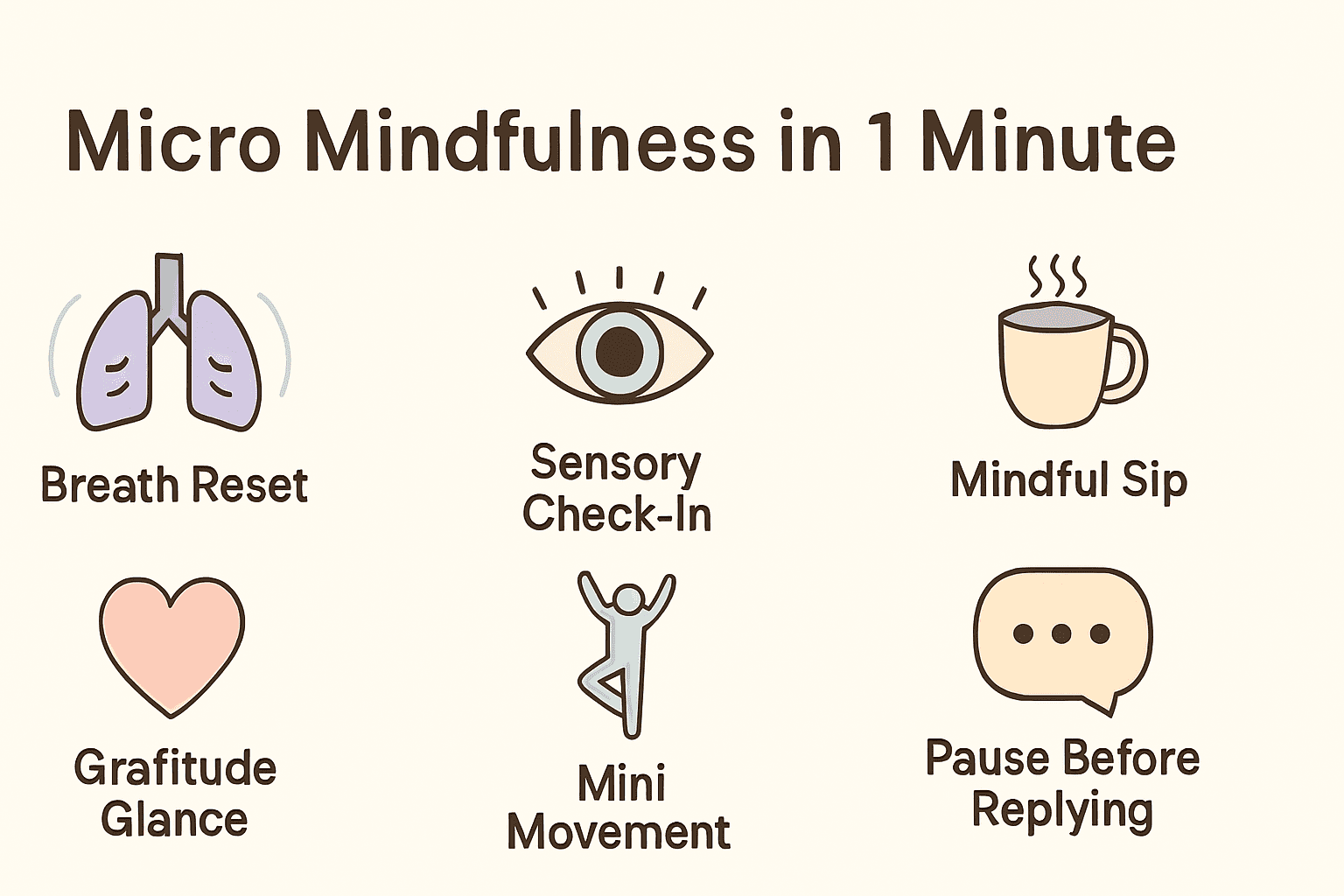
You don’t require an app or a yoga mat. All you require is awareness and intention. Listed below are simple, actionable micro mindfulness habits requiring 30 seconds to one minute but leaving you refreshed and centred.
🔹 Breath Reset (30–60 seconds)
How to do it:
- Stop. Sit or stand up straight.
- Breathe in deeply through your nose for the count of 4.
- Hold the breath for the count of 4.
- Slowly exhale through your mouth for a count of 6.
- Do it 3 times.
How it works: Deep breathing engages the parasympathetic nervous system, lowering stress hormones and soothing the mind.
🔹 Sensory Check-In (30 seconds)
How to do it:
- Close your eyes.
- Pay attention to 3 things you hear, 3 things you see, and 3 things you feel.
- Return your focus to the present moment.
Why it works: Stimulating the senses grounds you in the present, ending the loop of overthinking or being distracted.
🔹 Gratitude Glance (30 seconds)
How to do it:
- Look around and find one thing you’re grateful for.
- Whisper it to yourself or jot it down in your phone.
Why it works: Gratitude rewires your focus from stress to appreciation, improving emotional well-being.
🔹 Mindful Sip (15 seconds)
How to do it:
- Hold a cup of water, tea, or coffee.
- Notice its temperature, texture, smell, and flavour.
- Have one slow sip and enjoy it feeding you.
Why it works: Even this ordinary activity is a moment of awareness with your body and senses.
🔹 Mini Movement (30 seconds)
How to do it:
- Stretch arms overhead.
- Roll shoulders or just twist torso side to side.
- Breathe slowly throughout.
Why it works: Physical movement eases tension, enhances circulation, and lessens mental exhaustion
🔹 Pause Before Replying (20 seconds)
How to do it:
- When you get an email or message, pause before answering.
- Take one mindful breath and ask yourself, “What is the most mindful response here?”
Why it works: It stops hasty responses and promotes mindful communication.
Micro Mindfulness for Different Moments of the Day
Different times of the day bring different stressors. Micro mindfulness can be tailored to fit seamlessly into your routine.
✅ Morning Start
- Begin the day with 3 deep breaths while setting an intention like “I’ll approach challenges calmly today.”
✅ Midday Reset
- After lunch, take 60 seconds for a sensory check-in to avoid afternoon fatigue.
✅ Work Break
- Do a mindful sip or mini movement between meetings to recharge.
✅ Evening Wind-Down
- Reflect on one gratitude moment from the day before sleeping.
The Science Behind Micro Mindfulness
Research shows that even brief mindful interventions can have lasting effects:
- A study published in the Mindfulness Research Journal found that 1-minute breathing exercises lowered cortisol levels.
- Neuroplasticity research supports that small, consistent habits reshape neural pathways, improving focus and emotional regulation.
- Behavioural psychology predicts that accumulating micro habits (e.g., conscious sipping following brushing teeth) builds compliance and long-term change.
Challenges—and How to Break Through Them
❌ “I don’t have time.”
Solution: You need only 30 seconds. Tie micro mindfulness to a habit you already have, such as drinking water or glancing at your phone.
❌ “It feels awkward or forced.”
Solution: Do it in private to start. It becomes second nature over time.
❌ “I forget to do it.”
Solution: Place reminders or link the habit to triggers such as task transition.
Quick Micro Mindfulness Reference
| Practice | Time Required | When to Do It | Benefits |
|---|---|---|---|
| Breath Reset | 30–60 sec | Anytime stress hits | Reduces anxiety |
| Sensory Check-In | 30 sec | Midday, transitions | Grounding & awareness |
| Gratitude Glance | 30 sec | Morning or evening | Positive mindset |
| Mindful Sip | 15 sec | With beverages | Enhances presence |
| Mini Movement | 30 sec | Before or after work | Relieves tension |
| Pause Before Replying | 20 sec | During communication | Thoughtful responses |
Quotes to Inspire Your Practice
“Mindfulness isn’t about escaping reality; it’s about embracing it fully.”
“Small steps repeated every day shape a lifetime of resilience.”
“You don’t need a perfect mind, just a willing one.”
Small Moments, Big Shifts: How Mindful Small Actions Lead to Huge Changes
You don’t require a retreat, a therapist, or hours of meditation to reclaim peace and concentration. True change tends to start with small, conscious breaks—moments where you decide to be present rather than distracted, kind rather than self-critical, and peaceful rather than turbulent. These are the stories about individuals like you—juggling duties, dealing with unpredictability, and negotiating life’s turns—all while learning the power of small mindful habits to instil surprising strength, resilience, and happiness.
Continue reading to discover how everyday actions—just one breath, one stretch, one thankful glance—have enabled everyday people to tap into extraordinary change in their state of mind and overall well-being. These real-life examples demonstrate that it’s not about being perfect—mindfulness is about simply showing up, even for brief moments at a time.
Stacking Micro Mindfulness Habits
- Associate with what already happens: do a breath reset after brushing teeth.
- Employ reminders: set reminders with such titles as “Pause and breathe”.
- Small wins celebration: Celebrate even one consistent mindful habit done every day.
- Monitoring progress: Keep a habit tracker or journal to build motivation.
Micro Mindfulness Checklist – Daily Use
☐ Did I begin the day with a breath reset?
☐ Did I take a sensory check-in during a tense moment?
☐ Did I wait before responding to messages?
☐ Did I drink mindfully with my beverage?
☐ Did I think about something I’m thankful for?
☐ Did I stretch or move my body on purpose?
💌Last Note from Me

You don’t require ideal conditions or blocks of time to integrate mindfulness into your world. Micro mindfulness demonstrates that small, deliberate actions can shift your perspective and send waves of peace, clarity, and resilience through your day. These small practices are not only practices—they’re self-care tools and empowerment tools. Begin with one today. Even a 30-second delay is sufficient to remind you: you’re present, you’re able, and you deserve peace.
Let’s keep mindfulness simple, accessible, and integrated into each moment. Begin small, remain consistent, and see how micro mindfulness makes everyday days extraordinary ones.




One Comment