Why You Feel Emotionally Numb — Even Though You Care
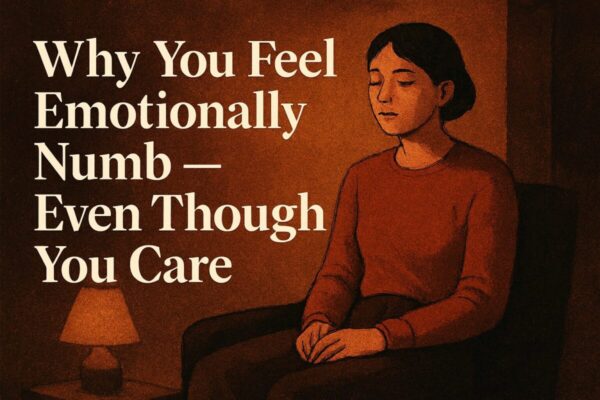
Of all the inner experiences, emotional numbness can be the strangest. You’re there, functioning, responding – but something vital feels muffled. You still care about people. You still show up. But the colour of emotional life seems dulled, like someone turned the volume down on your inner world.
This state confuses people because it doesn’t look like obvious sadness or visible distress. On the outside, everything looks normal. On the inside, there’s a flatness that can be hard to explain. It doesn’t mean you’ve stopped caring – emotional numbness often means you’ve cared too much for too long, without space to process it.
Lately, it’s surprisingly common to feel emotionally numb in a world rewarding constant engagement and quiet endurance. Yet, it’s rarely talked about in a way that feels accurate, human, or validating. This article explores what emotional numbness really is, why it happens, and how people slowly reconnect with themselves without forcing emotions or blaming themselves.
Table of Content
Table of Contents
What being Emotionally Numb Actually Feels Like
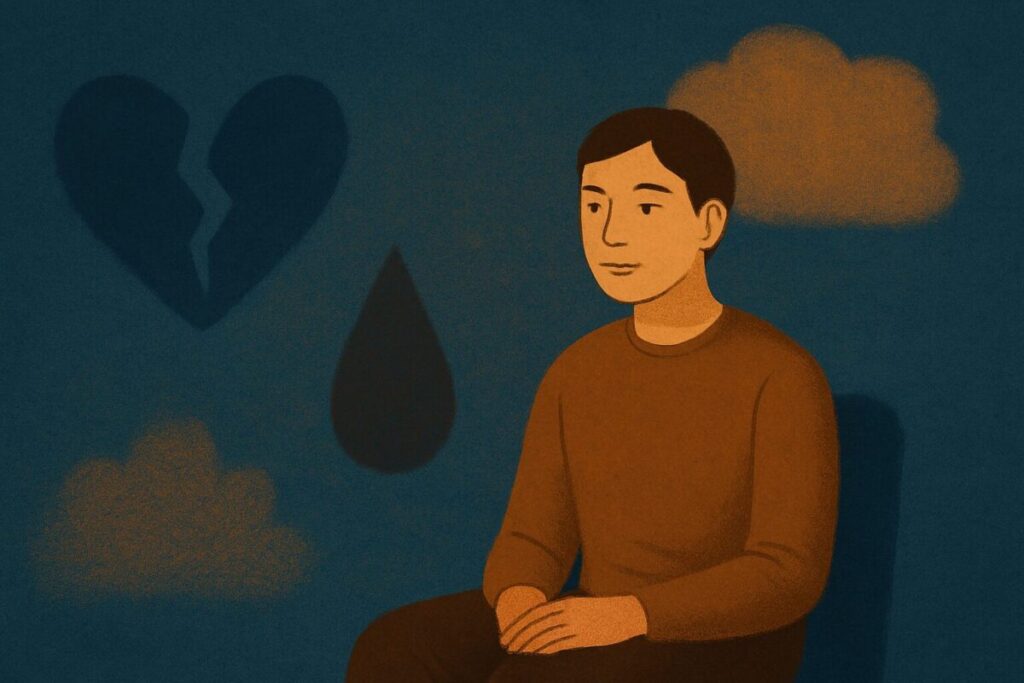
Being emotionally numb does not mean feeling nothing at all. It is more like feeling less-less intensity, less resonance, and less clarity of emotions. Joy feels muted; sadness doesn’t land. Even the moments that should mean something feel distant, as if you’re watching yourself react rather than actually reacting.
Many describe emotional numbness as:
- Feeling detached from their own reactions
- Going through life on autopilot
- Poor response: Responds appropriately, but without depth.
- Knowing that they should feel something yet not accessing it.
This can be a very unsettling state, as it creates a disconnection between experience and emotion. You may intellectually understand what’s going on in your life, but you emotionally feel removed from it. That feeling of disconnection often leads to guilt, most especially when you know you care about people but just don’t feel the emotions as strongly as you feel you should.
Caring Deeply, Yet Feeling Emotionally Flat
One of the biggest misconceptions about being emotionally numb is assuming it means indifference. In reality, many emotionally numb people are really empathetic, sensitive, and emotionally aware; they have simply reached a breaking point where their nervous system has chosen protection over expression.
Being in deep states of care for longer periods – about people, outcomes, expectations, or survival – will overwhelm emotional capacity. When emotions don’t get processed, acknowledged, or let go, the system adapts by turning down the emotive output altogether.
This is why emotional numbness often appears in people who:
- Have been emotionally responsible for others
- Suppress feelings to remain functional
- Carry unresolved emotional weight quietly
- First stability, then expression.
Numbness isn’t a character flaw but a response to cope with the situation.
How Emotional Overload Becomes Shutdown
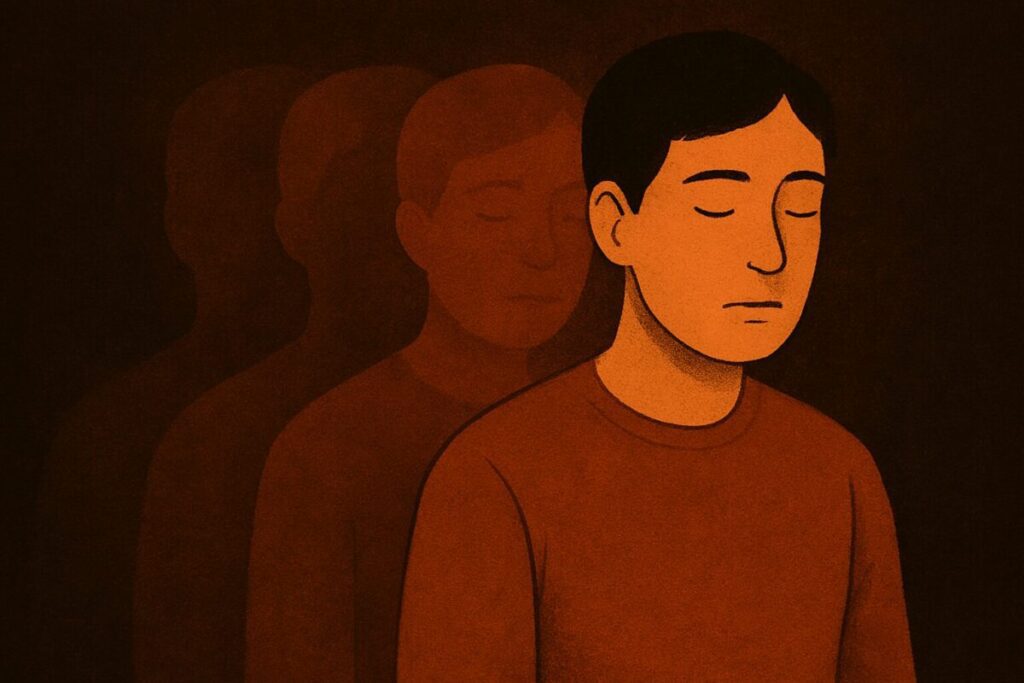
Emotional numbness rarely appears suddenly. It is always the eventual result of prolonged emotional strain without adequate recovery. When the mind and nervous system have stayed for too long in a state of high alertness, they pass into conservation mode.
Rather than fully processing each emotion, the system starts to generalise. Emotions become less distinct, less intense, and more ignorable. This isn’t conscious suppression; it’s adaptive shutdown.
With time, this adaptation becomes familiar. Feeling emotionally numb starts to feel normal, even safe. It reduces overwhelm. It keeps daily life manageable. But it also creates distance – from joy, from connection, from inner clarity.
Why Constant Coping Dulls Emotional Sensitivity
So many modern coping strategies keep people functional but disengaged from a deeper sense of being. Distraction, productivity, stimulation, and continuous mental occupation leave little space for emotional digestion. And when emotions don’t get space, they don’t disappear — they get deferred.
What this kind of near-constant coping mode does is teach the mind to stay outwardly focused. In that way, emotional sensitivity gets replaced by efficiency. Over time, this creates a situation of emotional flatness.
This is where emotional numbness becomes less about trauma and more about lifestyle patterns that never allow stillness or reflection. Without pauses, emotions don’t get integrated – they get muted.
Emotional Numbness vs Depression: What is the Difference?
Many people confuse emotional numbness with depression, but they are not the same experience at all. Depression is usually heavy, hopeless, or emotionally painful, whereas emotional numbness feels neutral: empty rather than heavy.
A person can still function well, even keep up routines, and seem very stable, yet feel emotionally numb. And what’s lacking is emotional resonance, not motivation. Understanding this distinction matters because emotional numbness doesn’t always need to be fixed; more often, it needs to be softened.
Labelling numbness incorrectly puts pressure on to “feel something”, rather than reconnect softly with what’s already there.
How Distraction Keeps Emotional Numbness in Place
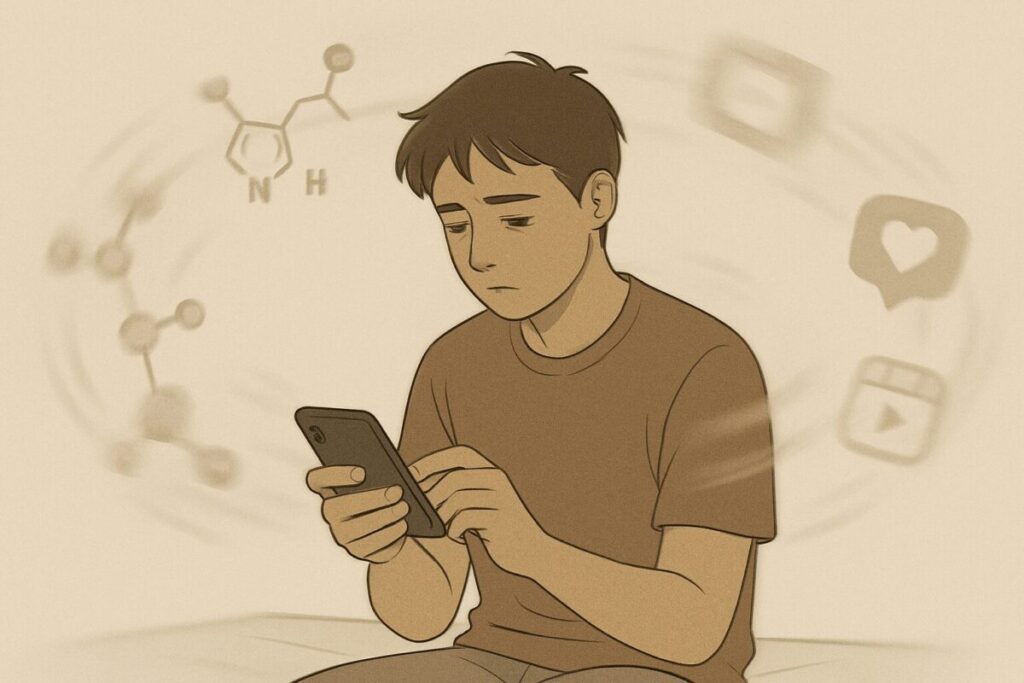
Distraction isn’t inherently harmful. It offers relief in small doses. When it becomes the constant presence in our lives, it prevents emotional awareness from surfacing. Many of those who feel emotionally numb keep themselves busy not because they want to avoid feelings but because stillness feels unfamiliar or uncomfortable.
This pattern often parallels modern dependence on instant gratification, when quick stimulation displaces slower emotional processing. When the mind is always occupied, emotions don’t get a chance to emerge.
Over time, this creates a cycle: distraction maintains numbness, and numbness encourages more distraction.
Quiet Ways People Stay Functional While Emotionally Numb
Emotional numbness does not prevent one’s daily life. In fact, a lot of people become highly functional while emotionally disconnected.
They:
- Keep routines intact
- Show up reliably
- Meet the expectations.
- Look composed and calm.
But functionality is not the same as emotional presence. The capability to function without emotional investment often develops out of necessity and not choice; it’s a survival adaptation that later becomes habitual.
Emotionally skimming may work through the intellectualisation of feelings for some people. Some individuals turn to music, content, or activities that repeat themselves so that there is no need to address emotional space. These things don’t numb; they maintain.
Why emotional numbness feels safer than feeling
Feeling deeply requires vulnerability: the opening to possible disappointment, grief, or overwhelm. Emotional numbness offers predictability. When emotions are muted, nothing feels too much.
This is why so many people unconsciously resist reconnecting with their emotions. It’s not the sadness they’re afraid of; it’s the intensity. Emotional numbness becomes a way to regulate exposure, even if it comes at the cost of emotional richness.
It was this understanding that reframed numbness as protective rather than broken.
What Emotional Reconnection Actually Looks Like
Reconnection with emotions doesn’t happen by forcing the feelings or demanding the emotional responses. It happens gradually and often subtly. Emotional sensitivity is restored through safety, not by effort.
This might look like:
- Feeling brief emotional flickers
- Noticing physical sensations connected to mood
- Feeling unexpectedly moved
- Experiencing moments of clarity rather than intensity.
These small shifts signal that emotional access is reopening. Progress doesn’t mean feeling everything – it means feeling something without overwhelm.
The Role of Emotional Safety in Feeling Again
Emotional numbness lifts when the internal or external environment has a good enough sense of safety to allow expression. Safety isn’t comfort; it’s predictability and non-judgement.
This might include:
- Reducing emotional self-criticism
- Allowing the emotions without naming them
- Creation of periods of no stimulation
- Allowing experiences to land without analysis
Safety invites emotional presence to return organically.
Why Emotional Numbness Is More Common Now
The pace of modern life is shaped by the idol of responsiveness and leaves little room for reflection. Emotional processing is, after all, slow and interior and unproductive by outward criteria. As a result, many people adapt by minimising emotional engagement.
This doesn’t mean society is emotionally unhealthy; it means the emotional capacity is being stretched without recovery. Emotional numbness becomes a collective adaptation to sustained stimulation and quiet pressure.
Understanding this context reduces shame and reframes numbness as a signal, not a failure.
What Feeling Again Doesn’t Require
Feeling again doesn’t require:
- Breakthroughs with unparalleled drama
- Emotional catharsis
- Confronting every emotion all in one go
- Vulnerability by compulsion
Emotions return through normalcy, not intensity. Through presence, not pressure.
A Gentle Way Forward

If you feel emotionally numb, it doesn’t mean you’re disconnected from yourself forever. It means your system has learnt to protect you in a specific way. That protection doesn’t need to be dismantled — it needs to be respected until it naturally softens.
Start by noticing, not fixing. Allow emotions to approach rather than chasing them. Emotional presence returns when it’s allowed to arrive quietly.
Final Thoughts
Feeling emotionally numb doesn’t mean you’re broken, unfeeling, or detached from life. It often means you’ve adapted to emotional overload in the only way that felt sustainable. Emotional numbness is not the absence of care — it’s the result of caring deeply without space to process it.
With time, safety, and gentleness, emotional connection finds its way back. Not through effort, but through allowance.